Back in 2008, Ultimate Guitar has published a 1975 vintage interview with Ian Gillan, conducted just before the release of Ian Gillan Band first album Child in Time. It is preceded by a long-winded explanation from the interviewer on how stupid he was in his younger years.
On with the main course:
Could someone find a similarity to Deep Purple in the new songs?
Well, to be quite fair, I think you could. Yes. I think you could probably say that certainly; Deep Purple as it was when I was with them, it’s the same voice and it’s the same singer. My attitude to writing has probably matured a bit, but then again I’ve benefited from a 2-year layoff. It’s got a freshness to it that has occurred to me, anyway. There must be a link obviously because I write the words and the tunes to the stuff I sang with Purple. And I’m writing the words and the tunes to what we’re doing now. We’re writing very much in the same sort of way. Everyone is writing what they’re playing, if you know what I mean. We just tie it all together and fortunately it’s working very nicely. It’s a similar writing formula to the one with Purple. I think probably when we go on the road, we won’t be such a loud band this time. Not that I don’t like the volume, I do like the volume very much. But the players are different kinds of players.
From the depths of Geir Myklebust’s archives emerges another vintage feature from the same time, based upon an interview with Roger Glover and Ian Gillan, conducted by Pete Makowski in a certain Swiss town. It was originally published in the issue of Sounds dated March 13, 1976.
Montreux is essentially a retiring home for rich persons. Like Brighton only a bit classier. It’s a place where a millionaire can spend his last years in the healthiest of surroundings before pushing off to that great Swiss deposit account in the sky.
It’s also the home of the Montreux jazz festival which, so the city’s tourist officer informs me, is overtaking the legendary Newport jazz festival in popularity and repute.
Montreux is also now the location for a new venture. The Mountain recording studios which have been installed into the brand spanking new casino building and is run by Jack Grod and his attractive American singer wife Anita Kerr.
Although it started business last July in time for the aforementioned Jazz festival it celebrated its official press opening only a couple of weeks ago which is how I got there.
As it happened Ian Gillan and Roger Glover were present there at the same time on business. Gillan was completing work on his new album with Glover acting as producer.
Almost three years after the Casino incident the ex Purple vocalist and equally ex Purple bassist find themselves at the same location that acted as a catalyst for the album that broke Deep Purple worldwide. Could this be more than fate?
On with the story…
Publicity blitz on the occasion of Machine Headremix continues with Roger Glover’s interview to Rolling Stone India.
What’s coming up for Deep Purple in 2024?
Well, a lot of people want to know, ‘When are you going to end? When are you going to finish?’ I know some bands do this, they say, ‘Right, this is gonna be the last concert.’ I just don’t want to do that, because there’s too much emotion involved. Too much pressure, too much stress.
I think the best thing to do is just play and play and play and then stop. The stop will come obviously from health or something like that and that’s life, but it’s a natural ending. It’s not an orchestrated last hurrah. Every night should be a last hurrah. Every gig should be, you imagine, it’s the last gig you’ll ever do. That’s how we think.
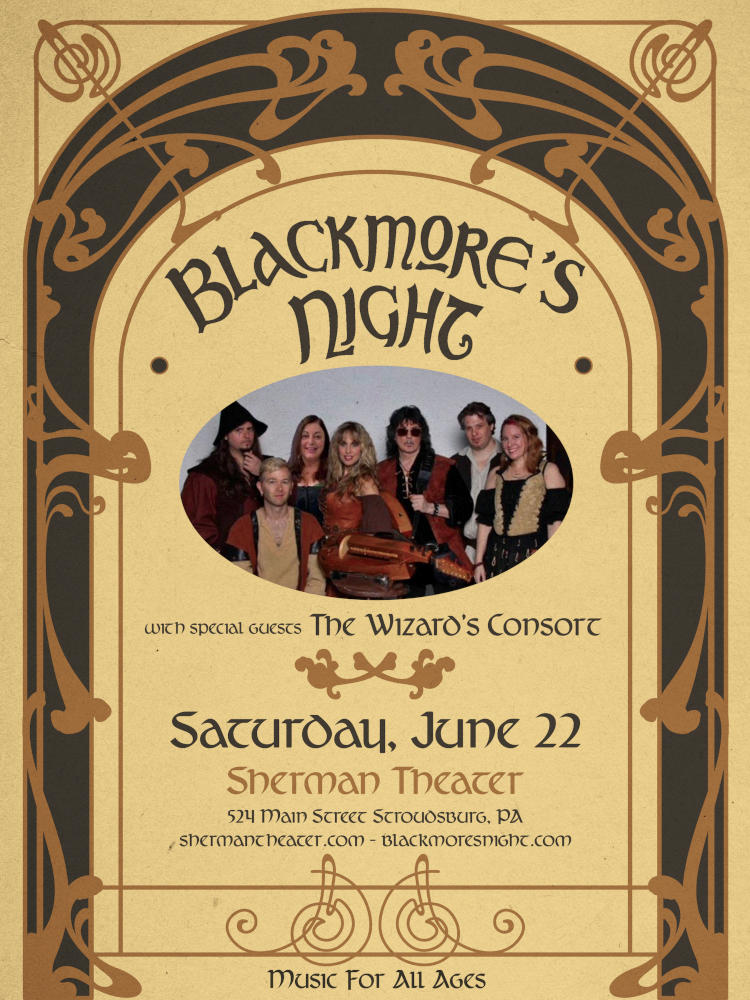
Meanwhile in the castle… US tour dates have appeared for Blackmore’s Night without much fanfare. The band of minstrels will play neighbouring states over the three weekends in late June and early July 2024. Tickets are already on sale, full details in our calendar.
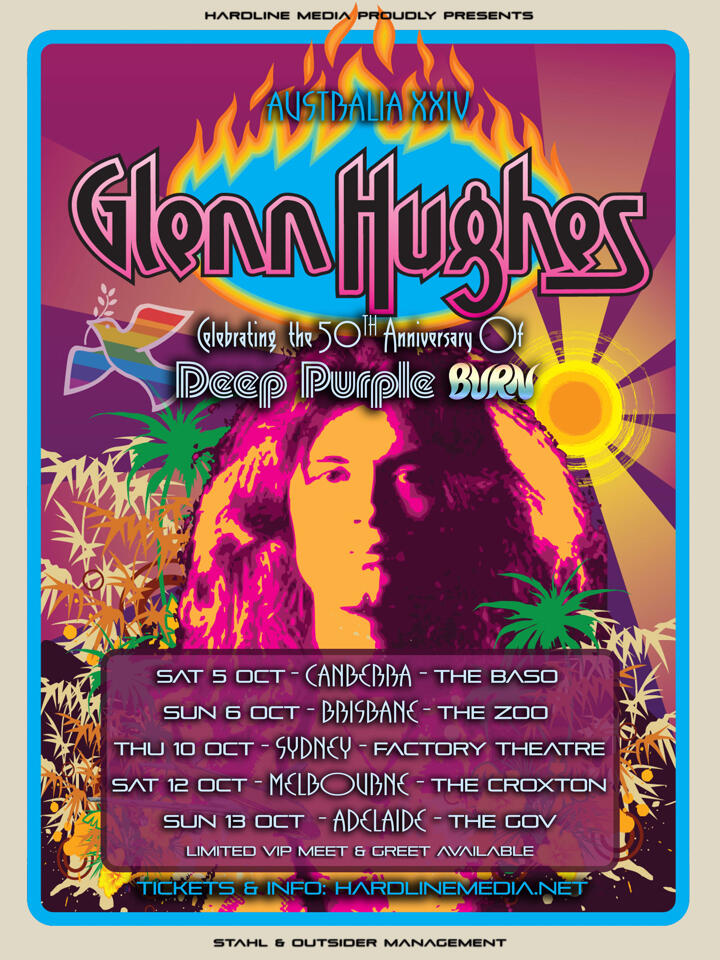
Australian tour dates for Glenn Hughes have been announced for October 2024. These are billed as the 50th anniversary of Burn, so expect the purple set. Ticket presales start on April 5th at 10:00 AM local time via Hardline Media. Further details available in our calendar.
In other Glenn news, he posted a brief update on his upcoming solo album:
Just finished writing new music for my solo album. Gab went to Minneapolis last week, so it gave me the opportunity to spend time alone recording. Be in the studio in Copenhagen in June. Be well, & Stay Free, & l look forward to seeing you on tour soon.
Thanks to Coast To Coast and Daniel Bengtsson for the heads-up, and to BraveWords for the quote.
Machine Head remix has certainly brought a wave of publicity to the band. We have collected them here instead of a multitude of individual posts.
Roger Glover spoke to the Polish radio station Eska Rock:
The Telegraph has a feature on the album based upon interviews with Gillan and Paice (caveat: it may or may not be behind a paywall depending on how the stars align over your head). Below are a few selected quotes from involved parties.
IG on touring routine in England back in the day:
We’d race back down the M1 as fast as we could. We’d all converge on the Speakeasy, which was the focal point for people who didn’t have far to go afterwards. You had to live in the London area so you could get home… But if you were in there with Keith Moon and a few others, and you were getting stuck in with the drinking and all the other pranks that went on, you could stay ’til they tipped you out at maybe five o’clock in the morning.
I didn’t smoke my first joint until I was 38 years old. We were a drinking band. Drinking and smoking. We grew up in pubs… we weren’t a drug band at all.
IP:
The management system we had in place at that time, every day we [played live] was a day they earned money. If we didn’t work, they didn’t earn money. So it was in their interest to keep us on the road. And if you look back, that short-termism was a big mistake. For them as well, because the band sort of imploded simply because of the pressure of work. Any decent management would have said, ‘Take [some time] off. Go and sit in the sun and relax’. But that never happened.
The time element was beneficial [to the recording process]. You had to apply yourself very, very diligently to make sure you did turn up for work every day in a fit state to do your job properly. For some musicians, who might have stayed in the bar a little too late at night, that can be an iffy thing. Because, to tell you the truth, there was nothing else to do.
A contemporary quote from Ritchie Blackmore, attributed to an unpublished 1973 interview:
Everybody’s out to kill everybody else in this band. Everybody thinks for himself. Every man for himself. We all go our separate ways… Nearly every American tour I leave. I was gone for about a month once. That was during a tour. We’ve all left it now and again. We’re about equal. Some of [us will] go on, play, nothing happens. Then we’ll have a big argument and a big scene. We have scenes all the time. We’re sadists, masochists at heart. That’s what keeps us going. We’re always having punch-ups. We usually beat up the manager about once a week.
IG retorts:
It’s not far from the truth. Apart from the fistfights. That was an exaggeration. There weren’t any fistfights.
[I] thought Ritchie was unbelievable. I thought he was amazing, and we adored each other in a manly sense… [he] was my roommate. We shared a lot of pranks together. We had a lot of good times together. We know a lot of each other’s personal secrets.
He hasn’t got anything electronic in his house, like a phone or a laptop or anything like that. I send emails… and I get replies saying ‘Ritchie thanks you’. It’s all third party.
Try your luck reading the whole thing in The Telegraph. Hint: turn off JavaScript in your browser if you hit the paywall.
Ian Gillan also spoke to the Super Deluxe Edition. It’s a long(ish) and insightful interview.
Have you been closely involved with the reissue and the remastering?
No – alongside it, we’ve been making a new Deep Purple record, so we were fairly remote. I think that’s a good thing because when we heard the first Dweezil Zappa mix, Roger and I were in Portugal at my studio – we were working on something else – and we went ‘What?’ And then we thought, ‘Hold on a moment – don’t compare it with the original…’
It is what it is, and we’ve got to listen to it for what it is and not compare it – it’s all different. I’ve seen the [new] video for ‘Smoke On The Water’, and it’s pretty good, so I’m looking at it from a fan’s point of view, rather than being in the band.
Do you like what it’s now possible to achieve with the latest studio technology, or do you not like messing with the past?
I don’t think it’s good or bad – you’ve got to take it for what it is. You can’t live in the past. Who’d have ever thought that Jane Austen, Dickens and Shakespeare would’ve had been made into movies one day? I think it’s fair game, and it’s exciting, and the material’s good enough to justify it – it’s survived all these years. It’s quite a nice feeling – I love it.
What do you think the new mix has brought to the songs?
Probably a fresh approach – technology has changed, the thinking is different now and so is the balancing of instruments. It’s a whole different process – around about 1982, when digital came in, it was absolutely shocking. I can tell you that when I heard Machine Head on CD for the first time, I nearly wept – it was so awful and so flat.
At that time, everyone was saying that vinyl sounded 10 times better than digital, and, of course, they were right, but the reason for that was because the engineers hadn’t caught up with the technology – they hadn’t trained themselves how to work it and make it sound good. It’s a completely different story today.
Analog Planet has a review of the remix, concentrating on the vinyl part, and sprinkled with quotes from Dweezil Zappa:
When I was recently contacted out of the blue and given the opportunity to take a ‘deep dive’ into the raw tracks recorded for Machine Head, I couldn’t have been more excited. The Machine Head multitrack recordings, in all of their 16-track, analog glory, found their way into my studio with the purpose of creating new mixes in stereo and Atmos. I was suddenly immersed in a rock and roll archeological dig of epic proportions, learning the secrets of the raw sounds on each track. For those of you who don’t know, the songs were recorded live with very few extra overdubs. A perfect example of this is ‘Space Truckin’.’ There’s a single guitar track and a single keyboard track. The huge sound of that song was the band itself, playing together in the room. Killer stuff!
The Tinnitist celebrates the reissue with an expanded version of their 2011 interview with Ian Paice. Which, in the grand scheme of things, had nothing to do with Machine Head, but is interesting for other historical reasons. It sounds quite prophetic at times — one can see how the things clicked together once they’ve met Bob Ezrin.
Speaking of pushing the envelope, is that the plan with the next album?
Every time you go into the studio, you try and have that possibility in mind. But it doesn’t always work. Really, it would just be nice to get a really strong album together with a really great sound. It sounds easy, but that’s really our downfall. We’re so egocentric — each of us — about our own sound that sometimes it can be negative in the end product. You really need a great sound guy to ignore all of our personal wants and just give us the best-sounding record we can get. Basically, we have to be outranked in the studio — even me. Because it’s quite simple: If you play straight up-and-down rock ’n’ roll, you can get an incredibly big sound. But all the little nuances that you play if you have a little bit of craft get lost, so you’re very protective about the bits that you play that you think people should hear. Whereas the producer will go, ‘That makes no difference to the guy listening to it.’ So you need that sort of cold, outsider point of view to say, “This is what’s needed; that really is unnecessary.” As the artist creating it, sometimes it’s very hard to disassociate yourself from what you did.
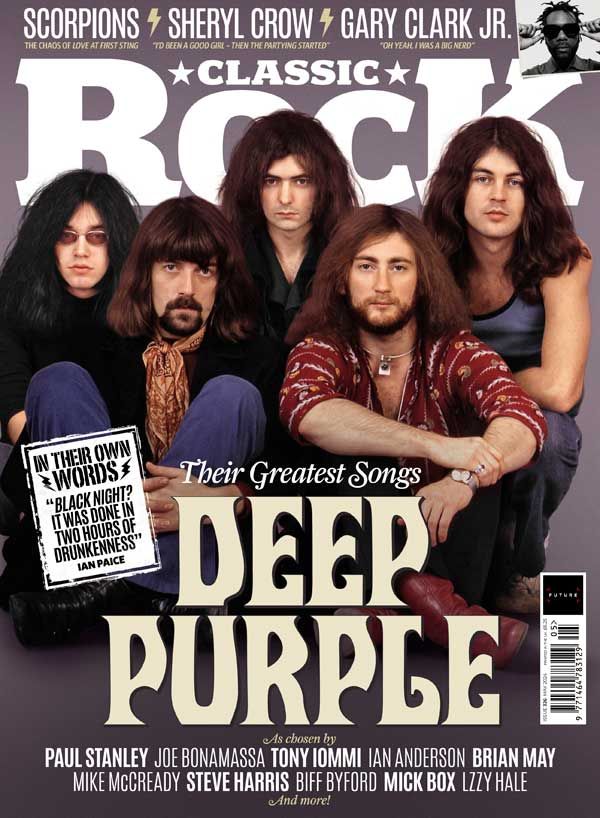
Well, the 2024 remix of Machine Head is upon us, and Louder Sound has a brief overview. The print edition of the Classic Rock magazine has announced issue 326, out on March 28, 2024, with the very Purple cover story.
In issue 326’s cover feature, band members and other stars talk about their favourite Deep Purple songs. Plus: how Machine Head was a triumph snatched from the flames of disaster.
PS. The release appeared on the streaming services yesterday, and we gave a listen to the Montreux 1971 show. It indeed appears to be a bootleg quality, albeit above average for that time.
Another Classic Rockreprint in Louder Sound — the awful year for Black Sabbath that was 1984. Demise of the Gillan-fronted lineup is very much included.
When, during their debut UK show at the Reading Festival in August 1983, Sabbath encored with the old Purple warhorse Smoke On The Water, there was disbelief, then disdain, then ridicule. It later emerged that they had also considered playing Purple’s Black Night. More astonishingly, with ELO’s Bev Bevan having become the latest drummer to replace Bill Ward, at short notice, guitarist Tony Iommi (at Bevan’s quiet urging) had actually suggested they have a crack at ELO’s Evil Woman. “But every time Iommi counted it in, it would make us all fall about laughing!” recalled Sabbath’s keyboard player Geoff Nicholls.
The world tour, stretched over seven excruciating months, would become legendary for all the wrong reasons. A week before Reading, bassist Geezer Butler narrowly avoided arrest when he threw a Molotov cocktail from his hotel room window, destroying another guest’s Ford Cortina. Three weeks after Reading, cops were called to a fight at a club in Barcelona, begun after the bouncers took exception to Gillan ‘jokingly’ setting fire to one of their waiters. Running to escape the mass brawl, Butler was arrested after jumping into the back of a police car, mistaking it for a taxi.
Louder Sound has republished a contemporary feature on the first Flying Colors album, released in 2012. It originally appeared in the Prog magazine from the Classic Rock stable, and was based on the input from all five members of the band.
What’s gone almost unknown until now is that Kerry Livgren almost became a member of Flying Colors. Livgren and Morse [then Deep Purple’s guitarist] had worked together in Kansas during the 1980s.
“The album’s executive producer [Bill Evans] wanted to put me together with Kerry again in some sort of writing project with Neal Morse,” explains Steve. “Neal and I came up with some song ideas, but when Kerry had his stroke, he couldn’t travel and it kinda ruled him out.”
Nothing composed with Livgren made it onto the record. Morse continues: “So Bill suggested that we work with Mike and of course after that we brought in Dave, which gave us four members.” It was Mike Portnoy’s masterstroke of adding Casey McPherson’s voice that transformed the group entirely. “Let’s face it, we’re not underwear models,” Steve laughs, adding: “Casey made the project real. He gave it direction. Suddenly our songs had the potential to become pop songs.”
Following Transatlantic’s modus operandi, the participants were encouraged to bring only song ideas to the sessions. “Working things up in the studio is also how Deep Purple does it, but I’ve never made an album in nine days before,” Steve grins. “With a group of guys that are very vocal about what they want, it sometimes became pretty hectic.”
Ian Gillan spoke to the Australian podcast Long Way to the Top. The new Deep Purple album was discussed, among other things, and Ian mentioned that it will be coming out in July. Continue Reading »
![[hand]](/hs-pics/portraits/hands/mcbride1.jpg)
![[face]](/hs-pics/portraits/faces/paice2.jpg)






 Unauthorized copying, while sometimes necessary, is never as good as the real thing