[hand] [face]
The Original Deep Purple Web Pages
The Highway Star

Call it impressionistic

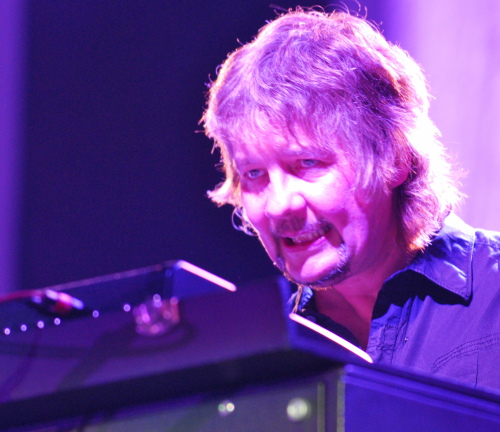
Ian Gillan, London, Ontario, February 11, 2011; photo © Nick Soveiko cc-by-nc-sa

Cleveland.com has an interview with Ian Gillan. And if by reading it you get a sense of deja vu, you’re not alone. After all, there are only so many ways to answer the same questions being asked over and over again.

The track “Man Alive,” which you released in advance of the album, is about the end of humanity. Kind of timely, no?

Gillan: It wasn’t planned that way. (laughs) There was an apocalyptic quality to the (music of) “Man Alive,” and the idea developed lyrically from there — the scenario of this event that took place and everyone got killed, and you get this picture of “all creatures great and small grazed on blood red soil, and grass that grows on city streets.” So, it’s a post-humanity scenario. And then all of a sudden something’s washed up on the beach, and it turns out to be a man, and it’s the only living man — but it’s just a man, so…That’s the end of humanity, because what use is one man? That was the idea. If it was a painting you’d call it impressionistic.

Read more on Cleveland.com.

Thanks to BraveWords for the info.

A household name

PR people at Edel are certainly learning their upkeep this time around as Whoosh got a mention on CNN:
Continue Reading »

A songwriter that happens to play bass

Here is the second part of the interviews from the Japanese Burrn! magazine Deep Purple special, courtesy of Akemi Ono who graciously supplied us with the reverse translations.


Burrn! August 2020 edition

Roger Glover Interview

Roger Glover considers himself very lucky. At a bass players conference, he said “If you want to move forward, find 3 talented musicians and never let them go. I really meant it!” Roger took the interview over his phone in Switzerland. He sounds 20 years younger than his age.

Burrn!: I think Whoosh is one of your best albums in recent years. What are your thoughts?

Roger Glover: I am glad to hear that. Not many people have heard the album so far. There is always a danger that someone with a glorious past creates a parody of yourself, but I think we have avoided that. People ask us why we don’t write songs like Highway Star any more. We write songs the same way we wrote Highway Star. It just doesn’t sound like Highway Star.

B: Is it difficult to create songs with Deep Purple in recent times?

RG: Practically speaking, yes, as we live in different parts of the world. When we were younger, we all lived in London. But when we get together, there is magic. I never bring a complete musical idea, because I look forward to inputs from other members.

It is a great joy for me to play with such talented musicians. Even if you wrote the basics of a song, it could change completely with other members’ input. That could be a joy and a hardship. When you have 5 creative people in a room, of course there could be friction. That is helpful, unless it destroys you.

B: How has your song-making process changed over the years?

RG: It hasn’t changed. It’s been the same since I joined in 1969. As Ian Gillan says frequently, Deep Purple is an instrumental band with vocals. We cannot control Deep Purple’s sound, because it depends on how each member plays. The sound is the end product of how we play. We don’t have a defined style. We find the verse, we find the chorus, and when all the items are there, we finally add the vocals.

People ask me to analyze our music, but I cannot do that. We just do what we do. When Steve Morse joined the band in 1994, he asked us what we wanted him to do. We just told him to be himself. You can’t succeed in a band if you are not yourself. Band is not work, it is an “impact”. When we created Purpendicular, Steve played in his natural style, and our song-writing took a completely different direction. Some people may say that our albums in the last 20 years don’t sound like us, but that is fine. It is great to go on a music adventure. That is the essence of music.

B: You have spent a long time with Whoosh as the release was delayed due to the corona virus. Has that changed how you think of the album?

RG: The biggest difference is that as I talk to you, this album is already a bit of an “old” topic to us as we recorded it last August. It is a magical time for us, that people have not yet heard what we created. It is just ours. It’s like delaying the opening of a treasure exhibition.

B: Are you satisfied with your work from 12 months ago?

RG: I am very strict with our work. I remember that when we recorded In Rock in 1970. I was sitting next to Jon on a train to northern England headed for a gig. We finished the final mix 2 days ago, and I told Jon that we could have done better. Jon told me “We couldn’t have done better. If we could, we would have done it. Don’t think any more.” I find that difficult to do, decades later. Maybe because I am a producer.

B: You have produced Deep Purple in the past, but now Bob Ezrin is the producer. Do you like it this way?

RG: Yes. It is very difficult to produce your own band. As a team member, you try to satisfy everyone, but a producer’s job is different. The producer needs to determine what is required of a song and look at the big picture. There is a big risk of creating an “average mixture” when you produce your own band.

B: Your first album with Bob was Now What?! You had not released an album in a long time.

RG: Yes, we hadn’t created an album since Rapture of the Deep. We did tour a lot, but I wanted to make an album again. But I did not want to produce it myself. When we met Bob, he told us that he didn’t want to be a producer of a rock band that was past its prime. He said we should capture the magic of our live shows in the album. Don’t think about creating songs that will be played on the radio. Then suddenly, we were full of ideas. I think it meant a lot that Bob told us we could be as creative as much as we wanted to. I think Bob loves us as much as we love him.

B: Whoosh has captured the ability of the band completely. There are moments that the band’s technical skills are shown, and others songs that are simple and catchy. What is your favorite song on Whoosh?

RG: I could forget that I am a band member and listen to the album as a fan. As a fan, I do have favorite songs, but I can’t tell you because it changes.

B: Please tell us what is your favorite now.

RG: Well, today I like Power of the Moon and Nothing at All. I met Don at a bar the day after we recorded Nothing at All. I told him I can’t get Nothing at All out of my head. He said he was the same, that he keeps on singing the riff. It is very catchy. When we create an album, we don’t have a plan. It’s like having a blank canvas and a palette with paint. We start throwing the paint at the canvas, and see what happens. Sometime it could be a disaster, but I don’t think that was the case for Whoosh.

B: Why was the album named Whoosh

RG: Titles could be tricky. From the early stages of recording, Ian said that title was going to be Whoosh. It’s a phrase that the actor John Cleese used in the British comedy Fawlty Towers. John (playing Basil Fawlty) is thinking about how life goes by so quickly and says “Whoosh! What was that that went by? That was your life. It went by very quickly. Can you live it again? No, unfortunately, that was it.”

Ian has that kind of edgy thinking, and Whoosh has a distinctive sound. If we named it The Destruction of the Morgue, it would sound like we were full of ourselves. I remember thinking that the Beatles would never choose such an album title. We were capable of naming our album Bananas, so we can give whatever title we like. By the way, Bananas was my idea.

B: Please tell us about your relationship with Ian Paice as the rhythm section of the band.

RG: We’ve played together for so long, we know each other inside out. When I first played with Paicey, I was astonished. I am not a bass player at his level. During my first or second rehearsal with Deep Purple, Paicey came up to me and told me, “By the way, I won’t follow your lead. I will lead.” So I said, OK. I’m not a bad bass player, but he is a master player. I am a realistic person, and I didn’t want to be kicked out of a band I just joined, so I tried to follow him. And it worked out really well.

B: It seems like you preferred to be called a “musician” rather than a “rock star”.

RG: That is true. It feels good to be part of this band. We have been together so long, we know each other very well, for good or for bad. I am used to being noticed, but I do not feel good about being treated as a special person. In Switzerland, where I live, people do not notice me, so it is great. Once before the lockdown, there was an occasion that I had to print some pictures of myself and went to a local print shop. The store clerk asked me if that was my photo, so I said yes. When I went back to pick up the prints, 20 people were waiting with a print for me to sign. I know I should get used to this, but it is not what I want. Selfies are not good, too. Now they want proof that they actually saw me. This may not sound polite to the fans. And of course, I would be complaining if we had no fans.

I get noticed mostly when we are touring, but no so much in my daily life. Once, around 1988 or 1989, I was living by myself and went to a convenience store to buy some milk. It was Sunday morning, and I was in the line with other unshaven folks. All of a sudden, some one called “Deep Purple”! I thought I was noticed, but actually someone just said it because I was wearing a Deep Purple shirt, not because he noticed me. Then he said, “Deep Purple is not as good as they used to be.” That was what I was thinking at that time, so I said yes, without telling him who I was. It was good to hear an honest opinion.

B: Has lockdown given you time to think about your life and music?

RG: It feels like I am rehearsing for a future time when we are fully retired. People ask me when I will retire, and I tell them I’m already retired. The last time I had a job was when I was 19. Being in a band is not a job. I am very thankful that I could be in the same band for such a long time. But it is equally important to live each day now, as to be proud of Deep Purple’s legacy. We just have to make the best of each day. A bit of a zen feeling. When you get old, you understand that every day is important.

B: Do you feel sad that you cannot tour?

RG: Yes. It is difficult to face the reality that we cannot tour until 2021. I play the bass at home, but I cannot learn much. I need to play in the band, giving everything. The current situation makes us understand how lucky we were to be able to play on stage every night.

B: You have many loyal fans, but do you think there is a new audience out there waiting for Whoosh?

RG: Before a gig starts, I notice that many in the audience are younger than 20, and most of them have never seen us before. That is my recognition, and I am happy about it. But I have never asked myself whether we need a new audience. I have learned over the years that teamwork leads to success, including management, record company, good distribution, although when I was younger, I did not appreciate that. Many people “plan” for success or hit songs, but once you start planning, you start struggling to do things according to the plan. What happened to us, happened naturally. Our commercial success happened because the music was created naturally, not according to a plan.

I am a songwriter that happens to play the bass. I think my true passion is to create songs. I am proud of songs that I created in the past, and I am proud of the songs included in Whoosh. And I will be happy if people feel the same way. But I do not have expectations. People are free to have their own opinion about this album, and that is fine.

Whoosh previews

The band’s record company posted this preview today. Here’s another chance to judge the album before listening to it in its entirety. 😉

Getting the facts straight

Ian Gillan spoke to Songfacts, explaining the lyrics for Throw my Bones and Nothing at All, before moving to “a few red lights”, “Perfect Strangers”, and “pony trekker”.

Songfacts: What was the lyrical inspiration for the song “Throw My Bones”?

Gillan: “Throw My Bones” is something that people did in prehistoric times to see if it was going to rain tomorrow or if they were going to be alive tomorrow. They started painting spots and they became dice – a game of chance. So, the idea of trying to find out what’s going to happen tomorrow, nobody knows that.

I went through this whole Brexit thing, and people saying, “We don’t have enough information and what’s going to happen?” I’m thinking to myself, “I know everything I need to know. Who knows what’s going to happen? But I’m prepared.” That’s what the song is about. It’s just about being content with life as it is. It doesn’t mean to say that you just sit there and don’t do anything or you don’t have ambition. It just means to say that you don’t know what the future holds. It may be something you’d really rather not have.

Read more in Songfacts.

Thanks to BraveWords for the info.

We’re talking about state of the art

Roger Glover was on WLVQ radio a few days ago, having another one of those “Mr Grover ‘n’ Mr Gillian” moments — speaking about Whoosh for one second, and then retelling the story behind Smoke for the umpteenth time.
Continue Reading »

The joy of music

Japanese Burrn! magazine has a 17-page Deep Purple special in its August 2020 issue. The feature includes pictures, discography, and interviews with Ian Gillan, Roger Glover and Ian Paice. Our Japanese correspondent Akemi Ono has graciously supplied us with the reverse translation of the more interesting tidbits of the three interviews. Here is the first part. We will present the other two installments over the next couple of days.


Burrn! August 2020 edition

Interviewer: Howard Johnson

Deep Purple completed its 21st studio album Whoosh. Whoosh is, without doubt, a wonderful album. Identities are wide-spanned, melodies are easy to remember, with musical interaction which enhances the spirit, and packed with passion. It appears that bands which were born in the golden era of rock music no longer have the intention nor ability to revolutionize itself again, but with Whoosh, Deep Purple shows that while they progress, they maintain the essence of what made them such a wonderful band when they first debuted. That is a real feat.

Ian Gillan interview

Burrn!: How are you doing? You seem to be living through the current environment with a positive attitude.

IG: Fine, thank you. I grew up with Calvinist work values so I can enjoy anything I do, even if it was to clean sewers.

B: You don’t seem to be down by the cancellation of the shows.

IG: The shows will just all be moved to 2021, I imagine.

B: Is it very important to you what other people think of your new album?

IG: I think what is most important is that I am satisfied. Of course, I am grateful to every person who buys our new album, but the standard of accomplishment is within yourself, and you know yourself whether that standard was met. I think we did a good job.

B: I think the new album is fresh and dynamic for a band with such a huge experience behind them. Why do you think that is so?

IG: Probably because no one wrote with the mind of writing for Deep Purple. It has been like that since we first rehearsed in August 1969. We jam for about 6 hours. When something interesting comes up, Roger starts recording. After a few days, we talk about it, and pursue what we like. What this means is that Deep Purple is an instrumental band. And that is what I mean by “no one wrote with Deep Purple in mind.” During this process, I don’t think of the melody or lyrics or even the title. It could all be for nothing if someone decides that they do not like the song. So, it is always the instrumental first, and then I join later. That has worked well, and at the end of the day, it sounds like the instrumental section supports the singer. It should sound like it, even if the truth was the exact opposite. We have always been a democracy without a leader. Although things have changed since Bob Ezrin became our producer.

B: Why is Bob so important to you?

IG: He has sped up the whole process. He encourages you, but also tells you when “you should stop beating a dead horse”. He makes our life much easier. And he has made our sound very rich and wholesome. There are no longer “holes” in the sound. The sound that you hear on stage, with all the nuances, becomes what you want to recreate in an album. With Bob, this wish was realized, all of a sudden.

B: You said Deep Purple is an instrumental band at heart, and don’t mention your achievements so much, but I was actually awed by your lyrics in Whoosh. They reflect the current world very intensely, with references to crimes with knives, and global warming.

IG: There comes a time when you think about the dignity of various matters, and you want to write about something other than fast cars and uninhibited women. To me, it came when I was in my late 30’s. I call it the “grey pony-tail syndrome.” The lyrics of this album is affected by where my thoughts were at the time of the writing. It was around the early summer of 2019. Extinction Rebellion (environmental organization) and young children stabbed or shot in London were in my mind at that time.

B: Drop the Weapon is definitely about young people’s violence in London.

IG: The matter was in my mind frequently at that time. But at my age, it is better to give a hug rather than say harsh words. I want to tell young people that life continues, they should not waste their future with an act of folly at the spur of the moment.

B: Are you interested in getting new fans with the music you create?

IG: If new fans cannot find us, we are not sending the right signal. We have really never thought about the audience, the industry, the commercial side of the media. If we did, we would have to guess what would make us popular. We have never defined ourselves as a heavy rock group or heavy metal group or classic rock group. We have always kept a distance from “exciting movements”. We have a long life because we stayed away from fashionable trends. I don’t want to sound arrogant, but that was really our survival instinct. And that gave us freedom.

B: You have created so much music. How is it possible not to repeat yourself?

IG: We have what is called “horse’s eyes”. When we are jamming, someone would raise their face and give a sign by rolling their eyes. That means we are finished, we have pretty much given everything. Staying together for so long, we know when the horse’s eyes are coming. It’s like we are marching together as a group. Someone says “Make a turn!” and we can all turn at the same time. 95% of what is in Whoosh, and the two recent albums as well, were recorded live. There is not much over-dubbing, and most solos are recorded while we are creating the backing tracks. This has been useful in not repeating ourselves. We need to maintain a superb balance, almost concert level. That pushes us to the limit.

Technically, there is an infinite combination of melody, tempo, chord structure, and rhythm. Even now, my band mates practice for 6 hours a day. They practice basic things, but sometimes it becomes a free-flowing jazz. I just sit there. And all of a sudden, I hear master players absorbed in their music. I give my word that there is no room for repetition in that environment.

B: Which song would you like Burrn! readers to focus on from the perspective of something special or extraordinary?

IG: I don’t use words like “special” or “extraordinary”, but I know what you mean. I would recommend Step by Step. It is a perfect example of Deep Purple jamming style. It happened naturally. The song was born from a moody and short 3-4 phrasing, and became a crazy crossover song with a strange rhythm. It all happened live, and it was great to see the song shining through. The lyrics are based on the famous Niagara Fall scene of The Three Stooges.

I also like We’re All the Same in the Dark. It is based on the theory I am contemplating, that if the reason for a war goes back one week, then the war lasts for one week. Every action causes the same level of reaction. The only reason wars are prolonged is simply the way we are brought up. We really need to have the ability to have doubts and think for ourselves.

B: How about Nothing at All? That is my favorite.

IG: It is my favorite, too. The guitar and keyboards are complete equals musically, and Don’s solo, much like a fugue, is amazing. It’s an unusual song for Deep Purple. I wrote the lyrics in 20 minutes. I don’t want to lecture with my lyrics, but it shows 3 sides of the discussion on how we treat the world. The young generation, older generation, and mother earth. In this song, nature is depicted as an old woman.

B: How do you feel about the situation that you will not be able to perform these songs in front of an audience this year?

IG: I was looking forward to the gigs. That is our job, and that excites us. Let me tell you a story. When I was “one of the fans” back then, I went to see Cliff Bennett and the Rebel Rousers. I’m still in touch with him. When I saw him, I realized I wanted to do exactly what he was doing. To be in the middle of music, with wonderful players. Having an audience was not a factor, really.

B: You belong to the generation of musicians for which being on the road was always an option for you.

IG: Interesting enough, I am in the process of brushing up old materials. This reminds me of various incidents that happened during the tours, which makes me chuckle. It’s difficult to imagine if anything could be more fantastic than traveling around the world with a group of people with the same objective. Musicians tend to have a dry, dark sense of humor because of all the difficulties we faced for being rejected on many occasions for contracts, canceled tours… We had already developed a stoic approach in the 60’s.

In my first interview, I was asked to give an anecdote, and I didn’t know what an anecdote was. I didn’t realize I had created my first anecdote during that interview. All of that comes back to me in songs such as 69 (from Abandon), which was a song about a professional band. “Flying through the night in a beat up wagon, a mike stand up my jacksy.” Six people and all of our equipment were jammed into a Ford Transit, and we drove all night. I didn’t know what a roadie was. We set up and repaired the equipment ourselves.

Touring was wonderful, and I don’t know why people have negative comments about touring. Interestingly, the touring environment prepared us for the pandemic.

B: Why is that?

IG: When you’re touring with a rock band, 90% is waiting and 10% is exciting action. So, we were well prepared for a lockdown. It feels like touring musicians are paid for waiting patiently.

B: You are a very successful musician. Is it difficult to connect your current self with your younger self?

IG: Not at all. I don’t have a sense that my life changed. I can go back immediately to my childhood when my grandfather was singing opera and my grandmother was teaching ballet. My uncle was a jazz pianist. And I was a soprano in a church choir!

The joy of music and performance, and being with other musicians, were always at the center of my happiness, and that never changed. That was true when I was in Episode Six and did not have a single hit. I remember making songs with Roger, thinking we wanted to make songs liked Lennon and McCartney. When we finally had a hit song in Deep Purple, Roger and I were already writing together for 5 years. We are a musical team.

Lastly, here’s a story that shows my passion for music is unchanged. On Whoosh, there is a song called Dancing in my Sleep. There was an old Danelectro guitar in the studio, and Bob Ezrin suggested Steve to play it. The song itself is quite outstanding, but Steve’s baritone guitar solo is truly amazing. I think it must be one of the best guitar solos I ever heard. That is the essence of my love for music. More than all of the music that we created in the past, what we are doing as Deep Purple right now excites me the most!

Listening party in Helsinki

Whoosh listening party in Helsinki

Perfect Strangers of Finland will be hosting a Whoosh pre-release listening party tomorrow, August 4, 2020, at The Riff in Helsinki. The album will be played twice in its entirety, first round starting at 18:00 local time. Caveat: the actual listening is still contingent on the mailman delivering the album in time 😉

What: Whoosh listening party
When: Tuesday, August 4, 2020, 18:00
Where: The Riff, Iso Roobertinkatu 3-5, 00150 Helsinki, Finland
Age limit: 18+

Thanks to Jari Kaikkonen for the info.

Less groove, more metal

There is a tribute album to Deep Purple out in Brazil. The shtick is that all the covers are done by metal bands with female vocalists. And apparently Brazil has quite a few of them. Some of these can be rather interesting, as long as you don’t expect faithful reproductions of the originals.

Revengin – a very Tarja-esque version of Knocking at Your Back Door:

Sacrificed – Fireball:

Rizzi – Stormbringer (premieres Aug 2, 2020):

Sleepwalker Sun – Burn:

Duo Arcanum – The Gypsy:

Volkana – Highway Star

The Knickers – Hush

Pleiades – Woman from Tokyo

Final Disaster – Black Night

Dixie Heaven – Ted the Mechanic, a song that rarely gets a cover treatment

Thanks to Mike Whiteley for the heads up.

Whoosh early reviews

Deep Purple, promo shot Dec 2019

Several Whoosh reviews from around the web, and they are all very, very positive.

Get Ready to Rock:

There’s no dip in quality; in fact just when you think there should be, track 9, three belters appears. Storming. The band do not sound like they are going to quit any time soon. Only actual physical death, or serious arthritis, is going to stop these guys. No pressure, no expectations, just album of the year so far. Between producer Ezrin and label Ear Music, Deep Purple are in a good place right now. Let’s hope it stays like that. *****

Sonic Perspectives:

When I say they ALMOST completely forgot about their rearview mirror, it’s because their history is too rich to be ignored. “Whoosh!” is undeniably a Deep Purple album, and carries all the elements that made them a force to be reckoned with in the classic rock arena. The title and cover artwork harkens back to the previous release “Infinite”, where the end of the road seemed to be fast approaching. Instead, this new entry in their discography effortlessly scrapes any doubts about their ability to deliver and promises to take the listener into outer space. This may look like an unattainable goal for a band whose members are well into their 70’s, but they reach it with unparalleled flair and ease.

Markus’ Heavy Music Blog

‘Now What?!’ and ‘InFinite’ are for sure great longplayers but in retrospective it feels like they paved the ground for ‘Whoosh!’. Deep Purple’s newest album contains all you can ask for. It’s the typical Deep Purple sound signature providing consistency on which variety shines. These five guys still know how to Rock and it seems they still have a lot of fun in writing and recording stellar Rock music.

9 stars out of 10

Roppongi Rocks

“Whoosh!” is a solid album of grown-up bluesy rock but with some nuanced twists and turns.

BraveWords:

No worries, this is a standard Purple release with just a few new wrinkles about it that bring an up to date sense of relevance you will not be able to deny, especially how the lyrics reflect a real-time presence. They manage to wrap their classic sound around current affairs and turn down the wattage for what is a super digestible outcome. Make no mistake this is Deep Purple, but with perhaps a side of something they have not explored enough in the past.

Sentinel Daily:

If this is the swansong then it’s a very good one…

The funky hard rock of Drop The Weapon (which with it’s little Dancing In The Streets quote from keyboarder Don Airey hints at the playfulness of something like Mary Long from 1973’s Who Do We Think We Are) aside, you don’t get much of the ‘classic’ Deep Purple sound anymore. This, of course, shouldn’t come as any sort of surprise should you know anything about the band; singer Ian Gillan is now seventy four years old, and long past any suggestions that he should try and regain the glories of yore…

What is surprising is just how well Purple have repurposed their sound to face the challenges of septuagenerian rock n’roll; Whoosh!, their twenty-first full-length studio album and first since 2017’s Infinite, finds the band in musical repose, broadening their sound to take in, well, anything they feel like doing really.

Ultimate Guitar:

Reviewer’s score: 8 Superb
Users’ score: 5.3 (6 votes)

“Whoosh!” is a good album, perhaps not a future classic or anything, but it’s hard to really find too many glaring faults with it, since its songwriting and musicianship are fairly good, and the band is clearly not resting on its laurels, even more than half a century into their career. About the only negative thing I can say about the record is that it won’t particularly “wow” you if you’ve been following all of the band’s releases up to this point. But it’s still a good effort from a band that has been around practically forever and refuses to simply become a nostalgia act.

Thanks to Attila and Gary Poronovich for the info.

||||Unauthorized copying, while sometimes necessary, is never as good as the real thing
© 1993-2026 The Highway Star and contributors
Posts, Calendar and Comments RSS feeds for The Highway Star