[hand] [face]
The Original Deep Purple Web Pages
The Highway Star

Depth and immediate identity

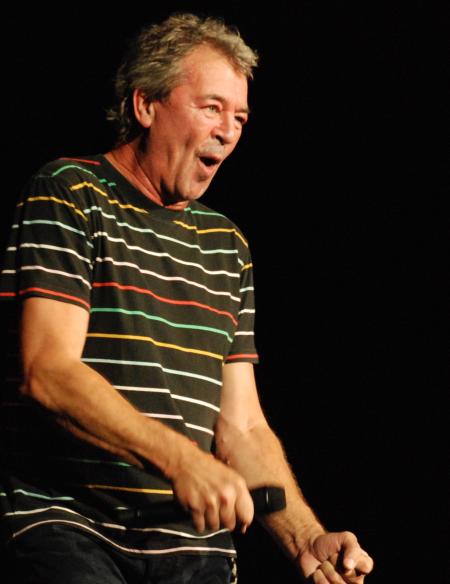
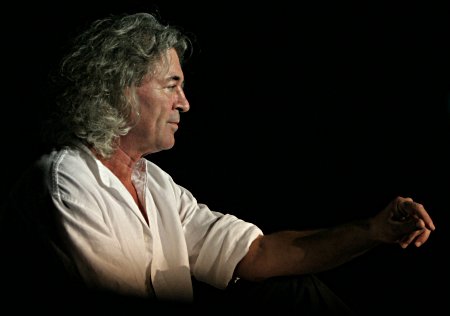
A couple of vintage Ian Gillan interviews on Louder Sound.

First, was a 2015 contemporary chat with Geoff Barton on the occasion of another snub of Deep Purple by the Rock’n’Roll Hall of Fame (the band was eventually inducted next year). As such, the interview was a part of Classic Rock feature celebrating the band, in spite of the Rolling Stone-affiliated HoF snub.

Which was the first Deep Purple track you heard, prior to joining the band?

I had the first three albums, but I can’t remember the first track I heard._ This Bird Has Flown_ was possibly the one. I’m not sure. It could have been April, could have been any of them, really. It could have been Hush. I had them all on my old gramophone.

How was it going from your previous band, Episode Six, into the melting pot that was Purple?

It seemed quite a natural transition to me. Joining with Roger at the same time made life easy. We joined not just as a singer and bass player, but also as a songwriting team. We were ready for everything except success. That’s the only thing we hadn’t been trained for.

Did you feel a sense of rivalry with other bands?

I don’t think we felt any sense of competition. It was the fans and the press who made big things out of the so-called rivalry between Deep Purple, Led Zeppelin and Black Sabbath. All the bands used to drink together. We never even thought about competitiveness.

Continue reading in Louder Sound.

The second one is a reprint of an interview taken by Malcolm Dome, originally appearing in Metal Hammer issue 155, dated July 2006. This interview deals with Born Again and revolves around numerous anecdotes from the stint, most of which you probably have heard before — from joining the Sabs after having one too many at the pub, to the life-size replica of Stonehenge.

It was agreed that the newly configured Sabbath would record the album at Manor Studios in Shipton, Oxfordshire, a complex that was then owned by Richard Branson]. But, as the singer recalls, the process was anything but normal. In fact, the whole situation was slightly surreal.

ā€œI hardly ever saw the rest of the guys,ā€ he says. ā€œI’d work in the studio during the day, and party at night. Tony and Geezer would party during the day and sleep at night – or something like that. Here’s how it would work. I’d go into the studio until about 5pm. And as I was leaving, the rest of the guys would arrive. We’d probably talk very briefly, and I’d tell them what I thought of one or two ideas they’d recorded the previous night. They would work until about midnight, then go to a club in Birmingham, and get back to the studio about 8am, at which time I was up and boiling the kettle for my first cup of tea – just as they’d be ready to crash out and sleep! It was crazy, but it seemed to suit all of us.ā€

Continue reading in Louder Sound.

Thanks to the stalwart commentator Uwe Hornung for the 2015 link.
Experience of how to come up with the goods

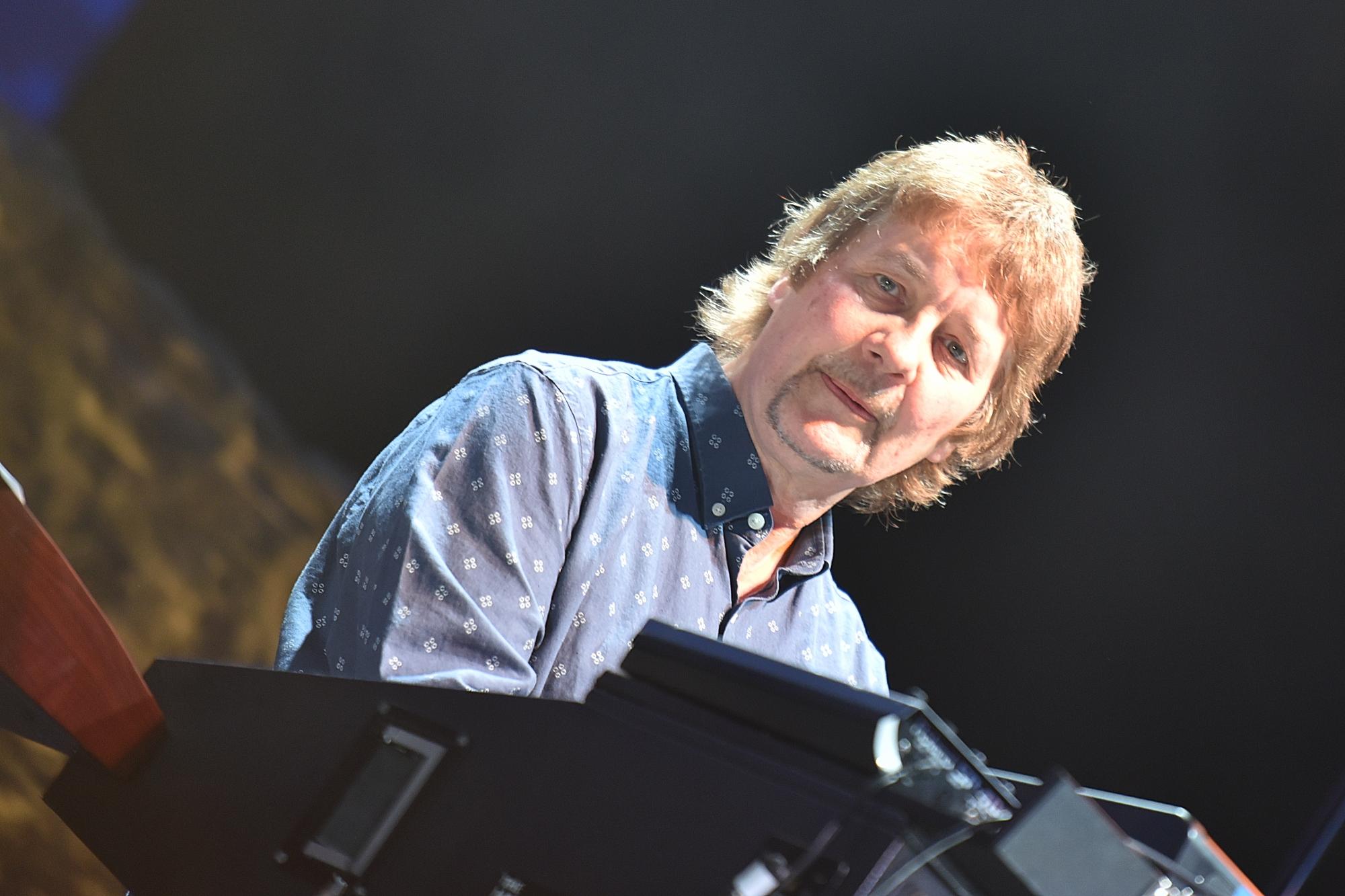
An outfit called Rock ‘n’ Roll Grad School talks to Dr. Donald Airey about his new album. If you’ve been paying attention, you may have already heard bits and pieces of what Don has to say here. Nevertheless, here it is Continue Reading »

The tale of two Davids

Steve Vai shares with Music Radar a couple of stage mishap stories from his stints with David Lee Roth and Whitesnake.

Vai recalls a similar incident on stage with Whitesnake and the band’s singer David Coverdale.

ā€œIt wasn’t too different,ā€ Vai says. ā€œFast forward a couple of years and I was playing Jones Beach Theater with Whitesnake, playing that big heart guitar in the rain.

ā€œI usually do pretty good footwork. I never go down. You get this foot radar, knowing where the pedals are, so you can act like a rock star.

ā€œI was backing up and knew the monitor was behind me, so I was moving to step over it, but I had these spurs on my boots.

ā€œThe spurs caught the monitor and again I was up in the air, staring at my feet and landing on my back, completely out.

ā€œAnd this time I had this giant triple-necked heart-shaped guitar on top of me!

ā€œI opened my eyes and this time it’s David Coverdale standing over me saying, ā€˜Steven, darling, are you okay? Are you alright?’

Here Steve Vai talks in 2024 to the Backstage Pass Rock-News podcast about his time in Whitesnake:

Thanks to Music Radar for the mild amusement.

Very much calling the shots

Don Airey on stage with Deep Purple, Tornonto ON, September 2, 2017; photo © Nick Soveiko cc-by-sa

Truemetal.it has an interview with Don Airey on the occasion of his new solo album Pushed To The Edge about to be released. The conversation also veered to discuss other parts of Don’s illustrious career — just check out the anecdote of parting the Red Sea at six o’clock in the morning to meet Jerry Garcia. Hopefully, such stories will be part of the book he is working on:

You mentioned some of the stories from your career, and I imagine you could have so many more to tell. Have you ever thought of writing a biography?

Well, I’ve written a lot of it down. I’m kind of writing the book, and the publishers are interested. ā€œHow are you doing?ā€. I’m always halfway through, you know, because career keeps going on [laughs] and on and on [laughs]. But I’m going to finish it this year. So, I’m making a determined effort. I know I’m quite amazed when I look back at some of the things I’ve done and what I’ve been through. It’s quite unusual, especially now. You know, it’s so long ago. It’s a different world that we live in now to the one I grew up in, musically. So many things have changed and yet nothing’s changed, you know, with music, really. It’s the same story. You know, what you need is a tune and a riff. When you’re somebody who looks alright and can sell it, you know. I remember Crosby, Stills and Nash saying something. The first time they toured, they toured for the girls. The second time it was for the money. And the third tour was for the music. [Laughs] And that’s something that always stuck with me. Being in a band, for me, when I first joined a band when I was in my teenage years, life changed. My life changed. I went from being a rather lonely, academic kind of guy who was interested in Chopin and Schumann to… You know, the world opened up to me, even though it just meant playing different places in my hometown. But sometimes going 12 miles to do a gig. And of course, you know, chased by girls and making new friends. It was very exciting. And it’s still the same, really.

Read more on Truemetal.it

She was a weird one in the setting sun

Vincent Price the other day seemingly opened a floodgate, and a generous helping of live clips from 2013 got posted today. We are talking, of course, about From The Setting Sun (Live In Wacken), which was a sibling release for To The Rising Sun (In Tokyo). Continue Reading »

The benefit of copious amounts of hindsight

In January 2024, Louder Sound reprinted a Classic Rock feature on Deep Purple Mark 4, which apparently slipped under our proverbial radar. It was penned by Geoff Barton for the issue 58 (October 2003) of the magazine.

ā€œI must say that the last tour for me was horrendously wrong,ā€ Glenn Hughes says today of Deep Purple’s infamously doomed Mk IV line-up world tour. ā€œRegardless of whether Tommy was a good choice as a replacement for Ritchie, there was a total line drawn around Deep Purple.

“It was me and Tommy, it was Coverdale sort of in the middle, and it was Lordy and Paicey on the other side – the two guys who were definitely not happy with our behaviour. I don’t know, man. Something happened when Tommy joined the band.ā€

Tommy Bolin had been playing guitar with Deep Purple for maybe four months when I noticed the first cracks in his relationship with the rest of band beginning to appear.

It’s early afternoon on a fine Indian summer’s day in September 1975. A 20-year-old cub reporter from British music weekly Sounds – that’s me – is standing in the foyer of London’s Swiss Cottage Holiday Inn, hanging on the house telephone, trying to call Bolin’s room.

Continue reading in Louder Sound.

Thanks to Uwe Hornung for the heads-up.

What’s not to like?!

Simon McBride talks about touring with Deep Purple with his guitar company PRS. Sounds like a thinly veiled commercial, don’t say you haven’t been warned. Continue Reading »

The joys of country living

This is a 1977 vintage interview with the country gentleman Ian Gillan, taken during the IGB Japanese tour. Continue Reading »

Vincent Price is back again

For no apparent reason, the record company has posted a live clip of Vincent Price from To The Rising Sun (In Tokyo), released almost 10 years ago. Continue Reading »

Rarely trod the conventional path

Louder Sound has a recent (conducted in November 2024) interview with Ian Gillan about his Gillan the band years. Big Ian seems frank, not avoiding unpleasant topics, and does not mince words much.

Gillan the band’s forerunners the Ian Gillan Band had come to an end when keyboard player Colin Towns brought in a song called Fighting Man that was ridiculed by the rest of the group.

The end of the Ian Gillan Band had been coming. Things weren’t right, but it was so difficult because I was working with my heroes. I idolised Gus [bassist Johnny Gustafson, ex-The Merseybeats, Roxy Music] for being so talented. We needed to get back on track, but Ray Fenwick [guitar] and Mark Nauseef [drums] were happy with that jazzier type of rock, though I wanted to play rock’n’roll. Fighting Man was a catalyst. It was a simple song but it had a certain profundity, and when those two took the mickey out of it, that was it for me.

So you sacked yourself from your own band?

Yeah. I just left.

In forming Gillan, Colin Towns had to be there.

Colin was pivotal to it all. Rock’n’roll is good, but you also need a simple platform for virtuosity to shine. Colin kept that gravitas. He added texture and dynamics along with all of those musical elements.

Bernie TormƩ was such a great guitarist.

Exactly. We had five guys that played equally well but Bernie was the one that stood out. I had spotted him some time earlier. He was amazing, and I marked him down for the future.

Shaven-headed man-mountain bassist John McCoy was almost a cartoonish character.

John was great. He made a big impact, just what we needed. He offset Bernie on the other side [of the stage].

Continue reading in Louder Sound.

||||Unauthorized copying, while sometimes necessary, is never as good as the real thing
© 1993-2026 The Highway Star and contributors
Posts, Calendar and Comments RSS feeds for The Highway Star