![[hand]](/hs-pics/portraits/hands/mcbride7.jpg)
![[face]](/hs-pics/portraits/faces/paice2.jpg)




Black Country Communion – a preview
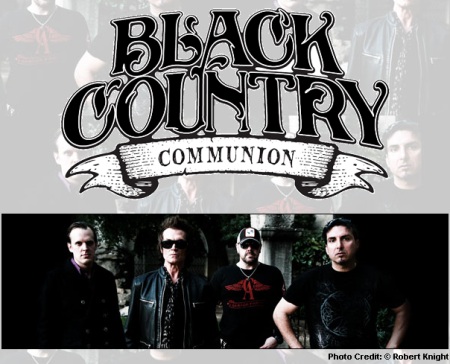
Glenn Hughes has decided he wants to spend the last third of his career playing rock music. The kind of music that earned him his fame in the early 70s, first with Trapeze and later Deep Purple. The vehicle that is intended to start this new phase of his career is Black Country Communion, the brainchild of producer Kevin Shirley.
Shirley had seen Hughes guesting at a Joe Bonamassa show in LA and thought there could be a band in the making. Rounding up the line-up with Jason Bonham on drums and Derek Sherinian on keyboards, they set out making their debut record in Malibu in January of 2010.
With Hughes amping up excitement for the project on Twitter during the last few months and recently stating in an interview that BCC sits comfortably alongside Led Zeppelin’s IV, Black Sabbath’s debut, Burn and Made in Japan in terms of sound, expectations are naturally high.
Can the album live up to those expectations? Probably not, but what it does offer is an excellent dose of old school classic rock spread out over 70+ minutes, with ”side one” being the strongest.
BCC is a band that has several things going for them. Very tasteful guitar playing, energetic drumming that never gets in the way of the songs and a strong live feel that is very refreshing to hear in these days of overdistorted rock albums and excessive overdubs.
Their music is not necessarily breaking any new ground, but it’s competently performed and Bonamassa in particular gets to shine. Indeed, in many ways it feels like a more rock based Bonamassa record with a heavier backing. He takes the lead vocal on two songs, and is given plenty of room to do his thing. Bonamassa’s playing comes from a time when the vibe was key, and this album is all the richer for it. There are melodic guitar solos a plenty and most of them feature his signature ”cascade of notes”. Overall, his playing does have the feel of being very much first take, which lends a nerve to the solos.
This leaves us with the second mainman of BCC, Glenn Hughes. Arguably one of the finest and most versatile singers there is, but also prone to excess sometimes. His work on this album is no exception, but he sounds excellent for the most part. As if to prove he’s really back in rock mode, there’s quite a lot of screaming from Glenn on here and although difficult to fault from a technical standpoint, some of it could have been trimmed back a bit. He has just as much presence when he restrains himself just a little bit. Some of the screaming takes away from the feel he still has in spades.
The album kicks off with a strong trio of songs, part of the appeal being the way they flow into each other. They pack a good punch and things are not dragged out for too long.
Black Country first, with its persistent guitar rhythm, edgy bass work and busy drumming. Glenn sounds forceful in a good way here: ”I am a messenger, this is my prophecy. I’m going back to the Black Country”, signalling the start of the album and project. There’s a short guitar solo at the end and without much further ado, it’s onto the next one.
One Last Soul, the natural choice for a single, has Glenn taking the front seat again. The catchy chorus, with its pumping bass line, would not sound out of place on American classic rock radio if given the chance. Nice guitar parts too.
The Great Divide is really strong too, for the most part. The somber feel of the verses is appealing, a laid back bass line driving them forward. Great phrasing and feel in the vocals. A neat build-up goes into the chorus, which is more powerful and dramatic: ”I’m on the great divide, I’m sanctified, be by your side…” The screaming outstays its welcome just a little bit towards the end of the song and some more variation here would have given it a full score. The guitar solo at the end is superb though: the tasteful choice of notes and the warm tone.
Down Again has the foundation of a pretty standard blues rock riff, but Glenn’s vocals manage to elevate the song into something a bit more special. The chorus sticks with you upon repeated listenings. A few of the phrasings is reminiscent of old Glenn – Phenomena? Some short guitar improvisation towards the end and that’s it. It sounds like a first take.
Beggarman is faster in tempo, has busier drums and a Hendrix styled main riff that repeats itself. A pretty basic chorus, ”I won’t be no beggar man…”, that wouldn’t have sounded out of place on Hughes’ ”Songs in the Key of Rock” (2003). Think of this song as a slightly more refined ”Gasoline”. In fact, a lot of the vocal delivery on BCC is reminiscent of ”SITKOR” and ”Building the Machine” (2001), in the way that there’s a lot of belting it out. Yet somehow I think Glenn sounds more inspired here as part of a group. There’s a short but sweet wah wah solo at the end of the song, with Glenn grooving in the background, before another run through of the chorus rounds out the song.
Song of Yesterday opens with a gentle Bonamassa guitar melody, which repeats itself to good effect. Bonamassa starts singing a few soft lines, and we’re getting close to the blues feel of his solo albums. They take their time with the intro, letting it build up, even adding some strings. Then an old school Free-ish blues riff breaks it off, and the song starts proper. Bonamassa sings lead on this one, with Glenn providing backing vocals and general embellishment. It’s tastefully done the way the song switches between soft middle passages and back to the main riff. Bonamassa can hold his own vocally, and the duet works well as a result. The guitar solo of the album comes at the end of the song, and is once again a display in feel and melodic sensibility. It’s very good. A building ”humming” section follows, with Bonham bashing it out in the background, before a repeat of the gentle guitar melody brings the song to an end.
No Time follows and is the first song on the album that has a slight filler feel to it. Its foundation is Bonamassa and Hughes (great bass sound here) simultaneously playing a riff that that has traces of Zeppelin’s ”Misty Mountain Hop” in it. Unfortunately, the verses are not that memorable, and the chorus is pretty ”standard fare” as well, hence the filler feel. It’s got a short middle section (with Kashmir-like strings), a nice build-up to the chorus and then it’s back to the main riff one last time. Not a poor song by any means, but not a stand out either.
Medusa is a remake of the Hughes penned Trapeze song from 1970. Glenn sings it beautifully with lots of feel. The version stays quite true to the original, but sounds surprisingly at home on the album. A testament to how the BCC sound is firmly planted in that early 70s era of British rock.
The Revolution In Me is the second song Bonamassa gets to take the lead vocal on. With a start and stop guitar riff, supported by Sherinian on the Hammond (he mostly stays in the background on this album), the song has Joe singing verses that are slightly too basic. A capable but fairly directionless instrumental mid section, and then back to the main riff again. Standard blues rock, but it’s kept fairly short.
The album is somewhat back on track with Stand (at the Burning Tree), a song that offers a little bit of everything: a lingering Bonamassa riff to start off with. Glenn sounds cool and funky in the verses and in the lush 70s melodic lead-up up to the chorus, which is sadly a bit too ordinary. A short Hammond and guitar solo in the middle is followed by another run through of the chorus, with Glenn adlibbing parts. More guitar and Hammond at the end.
Sista Jane has Glenn and Joe trading vocal lines in a song that somehow lacks the drive and special ingredients to make it stick out. It doesn’t really grab your attention. They go into a little jam towards the end, with Bonamassa leading the proceedings. Ends with Who-like synthesizers.
Too Late for the Sun is the long and mostly slow paced jam that closes the album. Circling around a start and stop bass line it has Joe and Glenn doing more vocal swapping. This is old school with an ”as we go along” feel. Some richly layered vocal harmonies in the chorus, with lots of mildly spaced out improvisational sections in between. It’s not the showstopper one could have hoped for, meandering along rather than knocking you off your feet. On the other hand, it never gets boring and then it still clocks in at 11+ minutes.
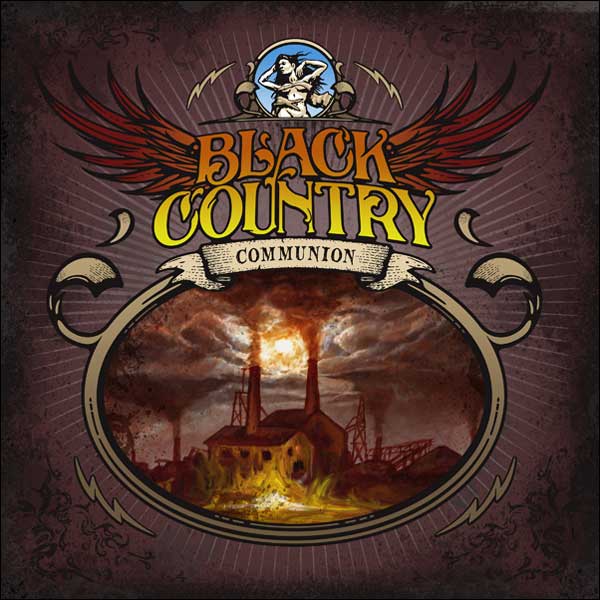
So how to summarise BCC’s debut? The briefness of the recording sessions, the whole album being cut in roughly 7 days, is definitely one of its biggest strengths. Yet at the same time, a few of the songs could have used some more work. Still, it appears to be somewhat of a grower and 2-3 listenings are needed before the songs start coming to life. The band’s rich and warm organic sound has a distinct appeal and it will be interesting to see where they go from here, with a tour planned to start in 2011 and Hughes already talking about making a second album.
Daniel Bengtsson
Black Country Communion is being released in the UK on September 20 and in the US on September 21.
You can pre-order the limited edition of the album (including a DVD) at Play.com.



 Unauthorized copying, while sometimes necessary, is never as good as the real thing