
The law of gravity still works
In this short clip, Roger Glover, Don Airey, and Ian Paice talk about old rumours. Continue Reading »
![[hand]](/hs-pics/portraits/hands/morse10.jpg)
![[face]](/hs-pics/portraits/faces/mcbride5.jpg)



In this short clip, Roger Glover, Don Airey, and Ian Paice talk about old rumours. Continue Reading »

Hot on the heels of his predecessor, Glenn Hughes’ top 6 list appears in Louder Sound:
Burn (Burn, 1974)
“We were at Clearwell Castle when Ritchie said: ‘We should write song called Burn.’ He had the idea of the title already. The five of us wrote that song together in the Castle’s crypt in the key of ‘G’; Jon’s Bach instrumental, inserting the riff… it felt magical. Burn is such a great, dramatic rock track. It stops, starts, turns around, and there’s the Bach influence and vocal harmonies. It was completely different to anything that Deep Purple had ever done before. It ticked all the boxes of those that questioned whether the new line-up could work.”
Continue reading in Louder Sound.
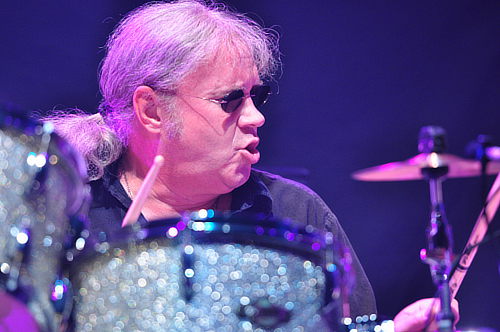
A couple of months before the recently featured Roger’s favourite Deep Purple tracks, Louder Sound had published a similar list from Paicey:
Highway Star (Machine Head, 1972)
“Not how it started in the studio, Highway Star became a monster on stage. And it’s still a monster. It’s almost like a template of how a hard rock band playing a rock’n’roll tune should be. It was really well-performed on the Machine Head record and the solos from Jon and Ritchie are incredibly interesting. The feel of the whole thing is so right.”
Continue reading in Louder Sound.
Speaking of Louder Sound features, there’s also a short story of how back in 1971 Roger got into a bit of bother with HM Customs over his newly acquired Rickenbacker 4001.
Thanks to MacGregor for pointing out the Paicey feature.
Steve Morse and Dregs’ bassist Andy West show their 2024 stage setups and talk about the gear. From picks to speaker cabinets, and everything in between — it’s all here. Continue Reading »

Louder Sound lists Roger’s seven favourite Deep Purple tracks
Hard Lovin’ Man (Deep Purple In Rock, 1970)
“Unlike concert halls, studios are very dead spaces. But the live sound we got on stage changed the band; it made us animated and aggressive. We started making violent music. With Hard Lovin’ Man there was no toning down, it was full-on. Even in the studio, Jon was still rocking his Hammond back and forth. That song was a breakthrough for us because it defined what we did on stage.”
Continue reading in Louder Sound.
That awesome Italian tribute band Strange Kind of Women didn’t lose any time learning and rehearsing the freshly released single and performed it at their gig on May 4 in Graz, Austria. Continue Reading »
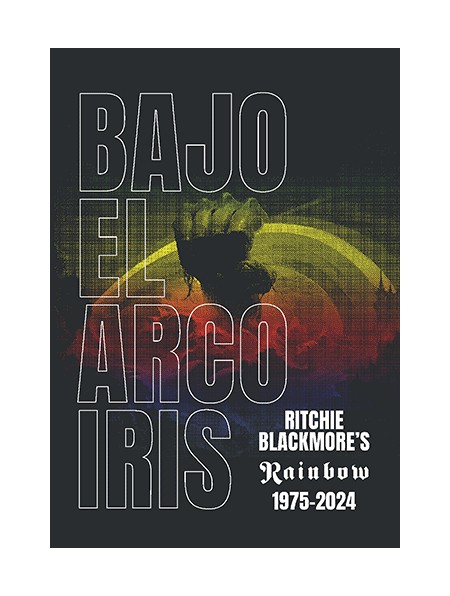
A new book about Rainbow has been published in Spanish. Titled Bajo el Arco Iris (Under the Rainbow), it covers all Rainbow lineups, discography, 20 pages of photos, list of live performances, as well as the early years of Ritchie Blackmore, his tenure in Deep Purple, summary of Blackmore’s Night, and reviews various guitars he has played in his career, all updated up to 2024.
The back cover blurb, translated into English, reads:
Ritchie Blackmore, unpredictable, temperamental, blessed with a mischievous, sometimes perverse — and occasionally destructive — sense of humor, has been a man of complex personality, a nonconformist always in search of perfection, unable to tolerate so much of the fool as of the recording studios. Due to all this, in 1975 he decided to leave Deep Purple and make both his dreams and his obsessions come true, whether musical or personal, and founded the musical entity known as Rainbow.
The group, and its famous logo, would become iconic, and over the years it would be the protagonist of fabulous performances, give rise to a good number of juicy anecdotes and produce several seminal albums such as Long Live Rock’n’Roll, Down To Earth , On Stage or the legendary Rainbow Rising. It would also be the school where two dozen great musicians were molded who, on their own merits, would leave their mark on the history of music. Among them, Cozy Powell, Don Airey, Graham Bonnet, David Rosenthal, Joe Lynn Turner, Roger Glover and the always missed Ronnie James Dio stand out. Fifty years later, this is the story of a legendary group that continues to surprise with the quality of its compositions and the intensity of its live performances.
Bajo el Arco Iris is written and published in Spanish, has 320 pages in 21 x 15 cm format, and can be ordered through Lenoir Libros for €20 + postage.
Thanks to the proud author Jose Galván for the info.
Andy Wood talks about meeting Steve Morse and jamming with him at the Dixie Dregs gig in Nashville, TN, on April 18, 2024. Continue Reading »
A rare interview with Mickey Lee Soule. This was done in 2020, at the height of the pandemic, and covers most of Mickey’s career — from starting to learn the piano at the age of 6, to his current at the time projects, and everything in between.
The first album with Elf was produced by Deep Purple’s Roger Glover. How did Roger get involved with the band?
Elf had a manager who live in Connecticut and he’d book us a few gigs. He got a position with a major talent agency in New York. When he went there it turned out that this agency was booking Deep Purple. Meanwhile our manager had got us an audition with Clive Davis of Columbia Records and it just turned out that Roger and Ian Paice just happened to be in the office so our manager asked if they’d like to go along and see our band. So, they came along. We had no idea this was going to happen until we got to the audition place and Clive Davis came out with a few people and sat down in front of us. We did a few songs. I’m not sure what Clive Davis made of us but they did know who Deep Purple were and Roger and Ian really liked us. They joked about it because when we first walked out, everybody was so short, that they asked if we were a circus act. After we played, they thought it was great. From that audition we got the record deal and both Roger and Ian wanted to produce it. Within a couple of weeks we were in Atlanta, Georgia in the studio recording the album. We recorded the album in a couple of days.
Read more in Metal Express Radio.
Thanks to Uwe Hornung for the heads-up.
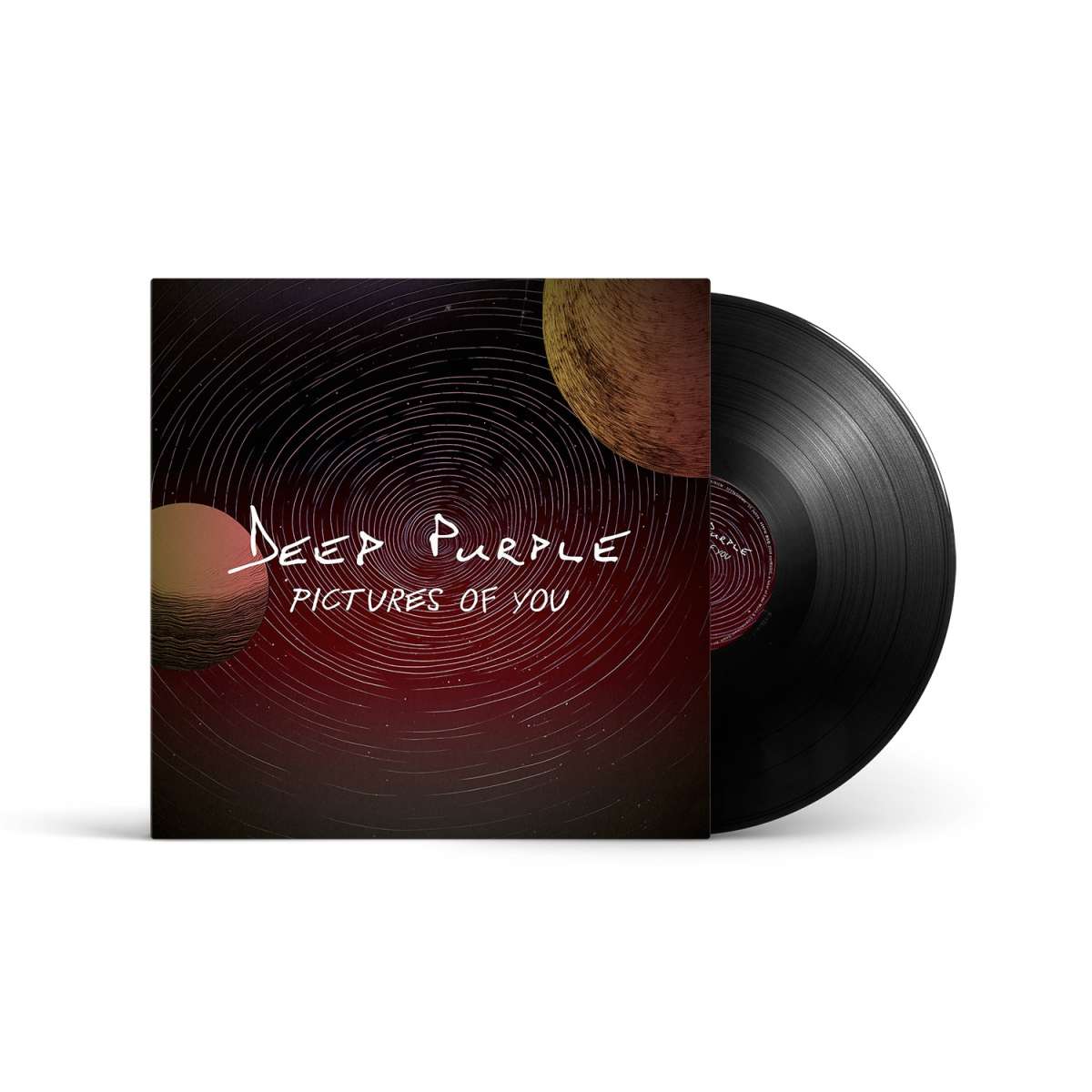
According to the German online retailer JPC, the next Deep Purple single from =1 will arrive on June 28, and it will be in physical form. The track to be released is Pictures of You, and the formats will include CD and vinyl. Continue Reading »
 Unauthorized copying, while sometimes necessary, is never as good as the real thing