
Security advice special
Caramba TV resumes their semi-irregular issues with a hotel security special — Big Ian offers timely advice on how to keep your valuables and cards safe when travelling. Continue Reading »
![[hand]](/hs-pics/portraits/hands/morse3.jpg)
![[face]](/hs-pics/portraits/faces/paice2.jpg)



Caramba TV resumes their semi-irregular issues with a hotel security special — Big Ian offers timely advice on how to keep your valuables and cards safe when travelling. Continue Reading »
The record company has posted a third video track from the Düsseldorf 2005 gig — this time it’s Strange Kind of Woman. Continue Reading »
Joe Lynn Turner was a guest on BraveWords’ Streaming For Vengeance podcast promoting his upcoming solo album. And he was asked about his stint as the Purple’s lead singer.
BraveWords: What is a project that you had your heart and soul set on, but it didn’t click?
Turner: That’s an interesting question. Nobody has ever asked me that before. I mean, look, from one album with Deep Purple, it was, I have to say, a disappointment, but I knew what was happening. I knew why it was happening. I knew that they got this huge deal from BMG to get Gillan back in the band. You can’t pass up a couple of million dollars like that. So, they were like, ‘Joe, sorry’. Everyone likes to say ‘Joe was fired’, but I wasn’t really fired, I was let go. I was explained the situation, and I said let me bow out to let Purple come forward again. Because I’ve always loved Purple. I was a big fan of the band my whole life, so I feel, as Ian Paice said, and I love this comment, I have a screen shot of it, and I’ll paraphrase it. He basically said, ‘Joe Lynn Turner was the link’. We would have never gotten to Perfect Strangers or anything if he hadn’t been there for Slaves And Masters, because Ritchie would have bolted. Ritchie would have left and done something else, and then there would have been no chance for them to regroup. So, I was kind of like the middle man, to keep it together. And he said many other kind words about me. I love the guy, but not because he’s flattering me, but because he’s accurate. And I knew that was the accuracy. We got so much flack for that album, but you listen to that album, it’s a damn good album.
BraveWords: Absolutely. And it has stood the test of time.
Turner: Exactly. The writing the production, the performances. Come on, it’s a good record.
BraveWords: But, despite that you’re only on one Deep Purple record, that’s a hell of a thing to have on a resume.
Turner: Oh yeah. I’m proud of it. I’m honoured and blessed to be on it. I was very fortunate. I mean, they had somebody lined up to be a singer and I was the last-minute call because at that point Colin Hart, the road manager called me up and said, ‘You fancy coming up for a month to audition?’, and I said, ‘I gotta audition?’. So I drove up for a month, and there they were in this beat-up, old, abandoned ski lodge, in the bar area, stinking of cigarettes and beer, and as soon as I walked in Blackmore started playing and I went up to the mike. And then John Lord, rest his soul, he started playing this piano bit, and that turned into ‘The Cut Runs Deep’. Right there and then. And they looked at each other after the jam and said, ‘He’s the guy!’, and Ritchie went, ‘I told you. He can write, he can sing. There it is, we got him.’ And they all said, that’s it. And that’s how it happened. Quite, in a way, last-minute. But I must say, at that time, I was coming out, I was already in Foreigner and out of Foreigner, that’s because during the time when Lou had quit, I call it the ‘Say You Will’ period. And I had a falling out with Bud Prager, the manager, because he was a complete arsehole, and I just told him he was. You don’t do that, right? Then Bad Company was also interested in a singer before they got Brian Howe. So, it was a peak of that leg of my career, and I went, ‘I want to go with Purple’, and that’s what I did. And I never looked back, and I don’t regret a damn minute of it.
BraveWords: Well, when you look at the lineage of singers, it’s a pretty exclusive grouping.
Turner: You know what? Absolutely. That legacy, to be part of that, I’m so blessed and fortunate, really I am. It’s like, ‘Pinch me’, it’s a dream. Really.
Thanks to BraveWords for all the heavy lifting.

Bernie Torme’s posthumous live album aptly named Final Fling will be released on November 25, 2022. It was recorded in December 2018 at the Barnroom Studios in Kent, England. Bernie passed away on March 17, 2019 after being hospitalized with virulent double pneumonia.
“Wild West” was recorded by Bernie and his final trio lineup (featuring bass player Sy Morton and drummer Mik Gaffney) live at Bernie’s Barnroom studio after the end of Tormé’s sadly prophetic The Final Fling tour in 2018. The run was a huge success, and with the band in dazzling form night after night, the trio soon began to regret the decision not to record any of the shows, so with the set fresh in their minds, the band loaded the gear into the live room and set up one more time to run through a set of classics numbers, spanning Tormé’s storied career. The energy and power is evident from the first crack of Mik’s snare drum as Tormé and company power through “Wild West”.
Mixed and mastered by Eric Tormey
Artwork by Tuli Tormey
Guitar & Vocals: Bernie Tormé
Bass & Vocals: Sy Morton
Drums: Mik Gaffney
The album will be available as a deluxe package at £38 (includes CD, t-shirt, woven patch, and enamel star badge), a standalone CD for £15 (tri-fold digipack with 12 page booklet), and digital download for £13. All formats can be preordered via Bandcamp.
Thanks to BraveWords for the info.

An outfit called VWMusic spoke recently to Simon McBride, and that resulted in an interesting interview.
Andrew: Can you recount the initial call you received to fill in for Steve Morse?
Simon: Well, there was talk of me stepping in for Steve temporarily towards the end of last year in 2021, but I never really thought much of it. I never thought much of it because it was always a case of, “It may happen, or it may not happen,” because it depended on Steve’s wife’s condition as to whether he would be able to tour. But it just got to the stage where Steve decided enough was enough, and he needed to look after his wife, which is an amazing thing he’s doing. So, I knew it was possible, but I didn’t know for sure; I only really found out recently that I was being confirmed as a permanent replacement.
Andrew: I chatted with Ian over the summer, and he mentioned that Deep Purple may start working on some new music in early 2023. Are there any updates in the way of new Deep Purple music?
Simon:
At the minute, I’m just focused on the tour. As you said, there’s been whispers of new stuff, but we haven’t done any writing or anything yet, so we’ll have to play it by ear. I take things as they come to be honest, and my main focus of attention right now is these shows with Deep Purple and having an amazing tour. But I’m always writing stuff on the road; it can be for me, or it can be for Deep Purple, so we’ll see how things unfold in terms of new music.
Read the whole thing in VWMusic.
Thanks to Blabbermouth for the info.
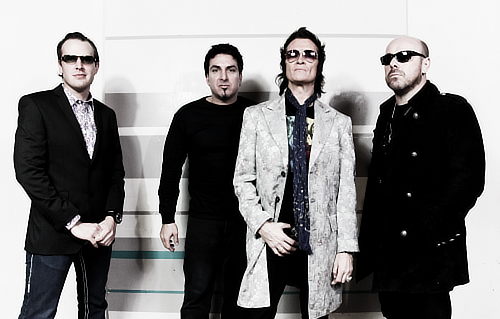
It sounds like Black Country Communion (remember them? — an on and off “supergroup” of Glenn Hughes, Joe Bonamassa, Jason Bonham, and Derek Sherinian) might record another album. Bonamassa spoke recently to Lazer 103.3 radio station and said:
We have quite the group chat going right now. So we’re gonna start — Glenn and I are gonna start working on writing some songs. We’re just gonna get together in October, next month, and we’re gonna start. And we’re gonna see if we can get everybody’s schedule lined up for next year and do another record. ‘Cause I really miss those guys. And when we fire on all cylinders, there’s nothing better.
I like nothing more than to be a member of a band and playing guitar. I don’t have to front it; I don’t have to sing all the time. And it’s a lot less pressure than being the front person. Being the person in front is a special skillset. You have to be an entertainer. You can’t just sit up there and stare at your guitar and go, ‘Wow. Look, I can play guitar pretty good.’ That’s not gonna fill the theater. You have to put on a show. And to put on a show requires being an entertainer. So being in a band, the sum of the parts is greater than the single entity. So this thing where Glenn co-fronts BLACK COUNTRY COMMUNION, I can just sit back and play rhythm guitar and watch him do his thing. He’s a legend. And then conversely, Glenn doesn’t have to sing all night; I’ll sing three or four [songs]. So we kind of spread out the whole workload a little bit.
Listen to the interview in its entirety on Soundcloud.
Thanks to Blabbermouth for the heads up and quotes.
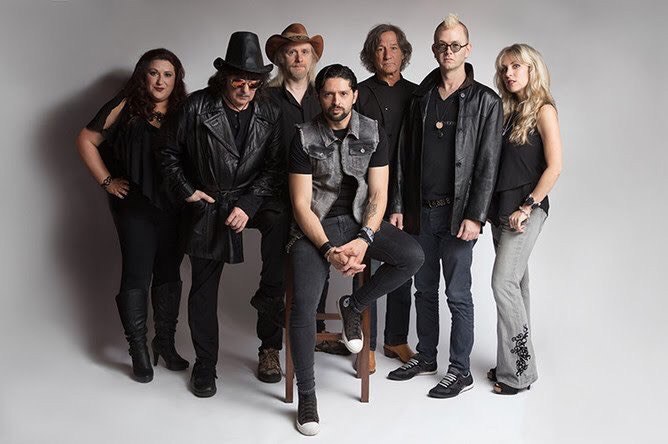
Jens Johansson, the keyboard player for the last incarnation of Rainbow, spoke to Blabbermouth on the future prospects of the band:
I don’t know. You never know. At the moment, of course, with the pandemic, everything went completely right down to zero, all activities. I think he’s back to doing some stuff with BLACKMORE’S NIGHT. To be honest, that’s where his heart is. If he has to focus on one band, that would be the number one priority. I was always joking that BLACKMORE’S NIGHT was ‘the’ band and RAINBOW was his basement band. [Laughs] Like a project. Whenever we would do European gigs with RAINBOW, it was somehow that the gigs would be placed around when certain castles were unavailable. [Laughs] It was like, ‘Sweden Rock has 40 to 50 thousand people.’ They’d say, ‘No, it’s on the wrong weekend. This castle is available, so fuck Sweden Rock.’ That was the attitude that BLACKMORE’S NIGHT is the priority, which I think is cute.
It was a lot of fun. But most people understood that this was a once-in-a-lifetime thing. Ritchie, he’s a little bit like a cat: You never know what he’s going to think. The next month he’s ‘No, I don’t want to go out.’ Then it’s ‘No, I don’t want to go out. I want to go in.’ You can’t predict which way he’s going.
Thanks to Blabbermouth for the info.
In case you haven’t heard, there’s a new documentary about Ronnie James Dio out. Truly yours ventured to movie theater this past weekend (for the first time in umpteen years), and here are some of my thoughts.
It is fairly well put together. David “Rock” Feinstein, Roger Glover, Glenn Hughes, Wendy Dio, Lita Ford, Rob Halford, Tony Iommi, Geezer Butler, Bill Ward, Vinny Appice, Sebastian Bach, and many others were interviewed for the film. I guess expecting an appearance from His Blackness was too much to ask, and absence of Vivian Campbell who even after all these years is not on speaking terms with Wendy Dio was rather conspicuous. Many an anecdote was shared, a lot of previously unseen footage was shown, and even more of the previously seen, but long forgotten. The film goes into great detail of Ronnie’s early years, but is also quite skimpy on his career between early 1990s and the Heaven & Hell reunion. And from our point of view that includes the glaring omission of his participation in the 1999 Concerto celebrations at the Royal Albert Hall and subsequent tour with Purple.
Verdict: not sure i can recommend going to a theater, but if you have a chance to catch it on a streaming service, do so without hesitation. And if you do end up in a theater, stay put until after the credits finish rolling and bonus outtakes start — they are hilarious.
Australian musician Stefan Hauk have previously appeared on these pages for his collaboration with Paicey. Stefan not only plays guitar and sings, but also does keyboards, drums, and bass. On top of that, he has the cojones to tackle Child in Time all on his own. Continue Reading »
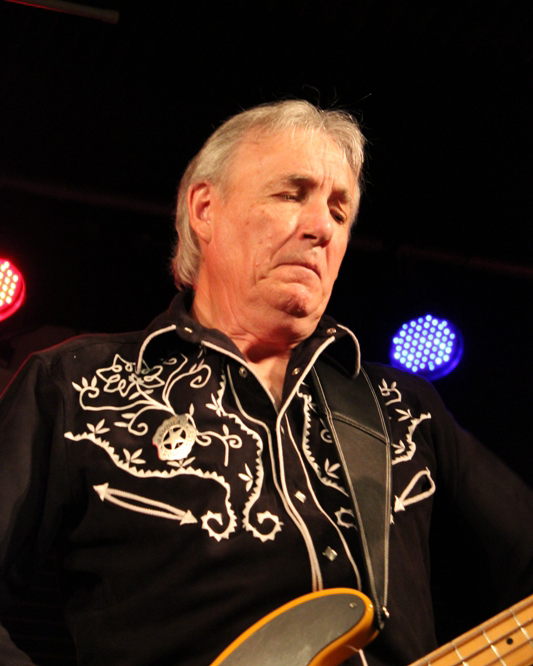
A rare beast in this universe — an interview with Nick Simper, courtesy of Karen Beishuizen for the the RingSide Report.
KB: You played bass on the first 3 Deep Purple albums and then left: what happened?
To say exactly what went wrong could be a book in itself! The whole episode is a very long story which I will soon be dealing with in depth during a future chapter on my website. The short version is that a new vocalist was secretly selected without my knowledge, and he came with a bass player as a complete package. The group chose expediency over loyalty, which became their trademark, and so I left before I could be pushed!
KB: In 2016 Deep Purple was inducted into the Rock and Roll Hall of Fame. Alle members from 1968 – 1974 were inducted but you as one of the founding members were snubbed: Why and how did you feel about this?
I never viewed the Hall of Fame as relevant to rock n roll and as such it held little interest for me. Of course, to be honored after a lifetime in music would have been appreciated although not expected. In the end only one original member of the group was present, and apparently even the other members were uneasy at my exclusion, but to me it held little importance and was a farce very quickly forgotten.
Read the whole thing in RingSide Report.
Nick is performing with Nasty Habits in Vienna on October 8.
 Unauthorized copying, while sometimes necessary, is never as good as the real thing