Don Airey’s latest solo album Pushed To The Edge (of which he hinted about back in September) is set to be released on March 28, 2025, via earMUSIC. Joining him on the record are Carl Sentance and Mitchell Emms on vocals, Simon McBride on guitar, drummer Jon Finnigan, and bassist Dave Marks. The album will be available on a digipak CD, 2LP gatefold black vinyl, digital download, and streaming.
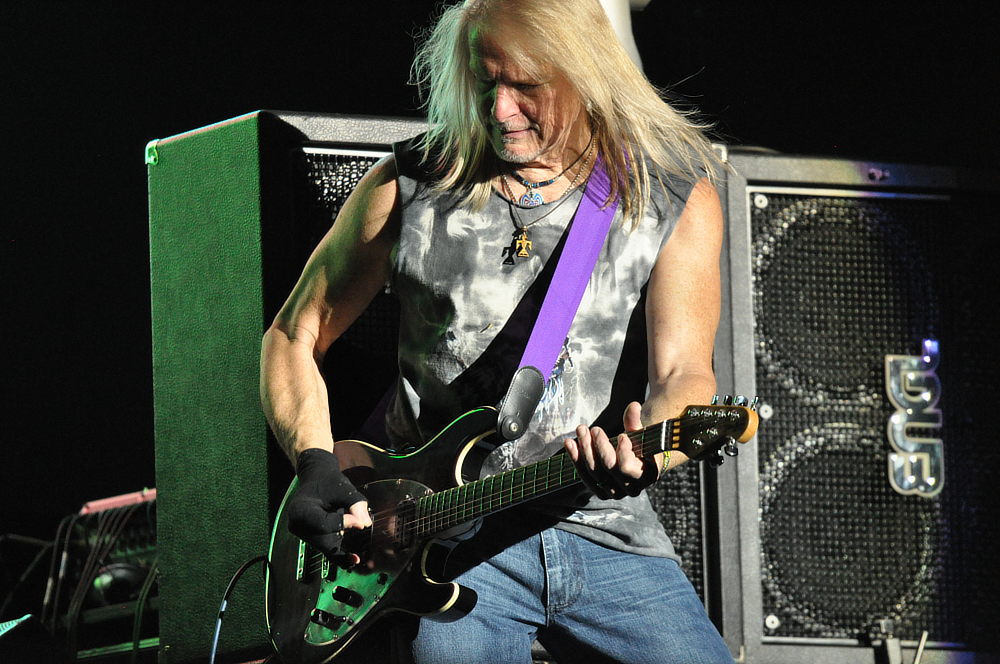
Steve Morse dispenses wisdom to younger players on the virtual pages of the Guitar Player magazine.
What were some of the biggest challenges you faced shifting from Kansas to Deep Purple?
My first encounter with Deep Purple was a really good jam session, and my first encounter with Kansas was a writing session. Those were different things, but they were the things that I connected on with each band. With Kansas, it was more about writing, but with Purple, it was about the feel of everybody improvising, listening and reading each other’s minds. With Purple, that connection grew very organically.
Did you need a whole new setup to cover Ritchie Blackmore’s parts?
I eventually changed the amplifiers four times before I ended up going with Engl. When I first started with Purple, I was using a 5150 setup. I used that through the [1996] Purpendicular album. That setup worked fine, but the gear needed to be turned up in order for the type of distortion I needed to convey the notes. The search began to find a rounder tone with more impact. That led me to the Marshall Jubilee to the Marshall 2000 series to Engl.
What made Engl Amps perfect for Deep Purple?
At the time, I liked some of the characteristics, but I really wanted to make some changes. Luckily, the designer started bringing prototypes to the shows with breakout boards attached to the amps that let me adjust the tone centers of the tone controls. It was awesome. That begat my signature amp.
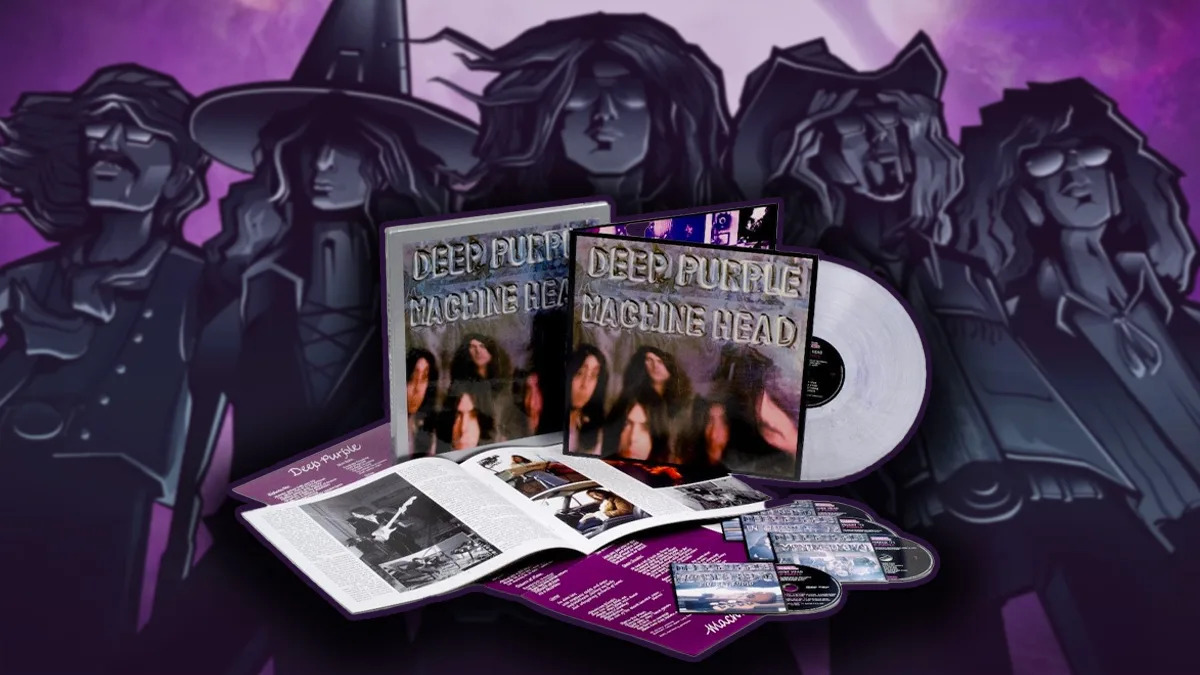
Couple of Machine Head related articles in the Vintage Guitar magazine. Both have originally appeared in the May 2024 issue of the magazine, and now are also available online.
Roger Glover was interviewed on the occasion of the Dweezil Zappa’s remix of the album.
The recording circumstances are part of the Machine Head legend, so would it have lost some of its magic if it was recorded traditionally in a sterile studio environment?
Absolutely. But that’s what studios did. They took sound away. They controlled it too much. Our concerts were pretty wild. Crazy-sounding, loud and vicious, and aggressive and exciting. We wanted to bring that into the studio somehow. The idea was to record an album in a venue, not in a studio.
If we didn’t quite achieve it, it’s because, to me, the album sounded a bit muddy considering we were after this huge, echoey sound. But whatever it was, it worked. It certainly would’ve been different if we’d done it in a proper studio.
The fire changed everything. It took our time away, but brought the band together in a way we wouldn’t have if we were all living at home, traveling to the studio at night.
Guitar World has a story about the origins of two-hand tapping guitar technique, and Ritchie Blackmore is indirectly involved.
It sounds like something out of one of those corny classic rock-themed parodies of Renaissance paintings.
The setting is one of the most famed rock venues of all time, LA’s Whisky a Go Go, and the year is 1968.
Onstage is Harvey Mandel, the underrated guitarist who highlighted his performances with flourishes of two-hand tapping years before Eddie Van Halen put the technique on every guitar player’s radar. In the audience are, among others, Ritchie Blackmore, Jimi Hendrix, and Jim Morrison.
Now, these are rock stars after all, and so each of them is either hammered, or well on their way to being so. Morrison, as was often the case, is much further along that path than anyone else.
Already a blues-rock veteran, and soon to be a member of Canned Heat, Mandel was in fine form onstage, and confident enough to pull tapping out of his bag of six-string tricks, surprising his audience in the process.
Here’s Harvey Mandel demonstrates his technique at a 2012 gig:
Read more in Guitar World. The Blackmore’s 1991 interview that the article quotes, we coincidentally happen to have in our archives.
The complete performance of Jon Lord’s Concerto for Group and Orchestra that happened in Munich in October 2024 has been posted on YouTube for your viewing pleasure. The piece was performed by the rock band Boxhead and Abaco-Orchestra conducted by Ina Stoertzenbach. Watch out for some delightful deviations from the canon. Continue Reading »
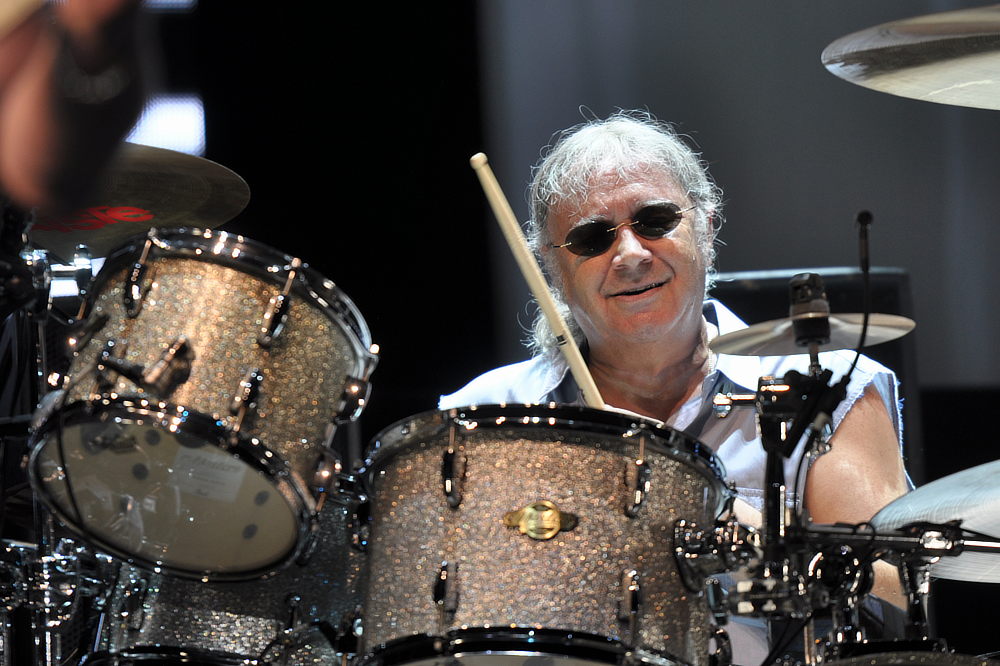
The Guardian has a piece dealing with “how rock’s drummers cope with furious sets in their 70s”, and Ian Paice is featured there, among his peers Rat Scabies (Damned), Nicko McBrain (Iron Maiden), Paul Cook (Sex Pistols), David Kendrick (Sparks, Devo), and others.
Ian Paice, 76, has just finished a tour with Deep Purple, the band he co-founded in 1968. Even 56 years on, the shows were touching two hours long and opened with the band’s fiercest, most propulsive song, Highway Star.
“Many of the things I found easy when I was much younger are now difficult,” he says. “But I know a lot more now than when I was younger. So you substitute things: that is going to be difficult, but I can do that instead. Anybody who thinks they can do exactly the same thing they did 50 years ago is mad. There aren’t many guys of my generation left playing what I call ‘powerful drums’.”
There’s not much more Purple related in the article, but here is the link.
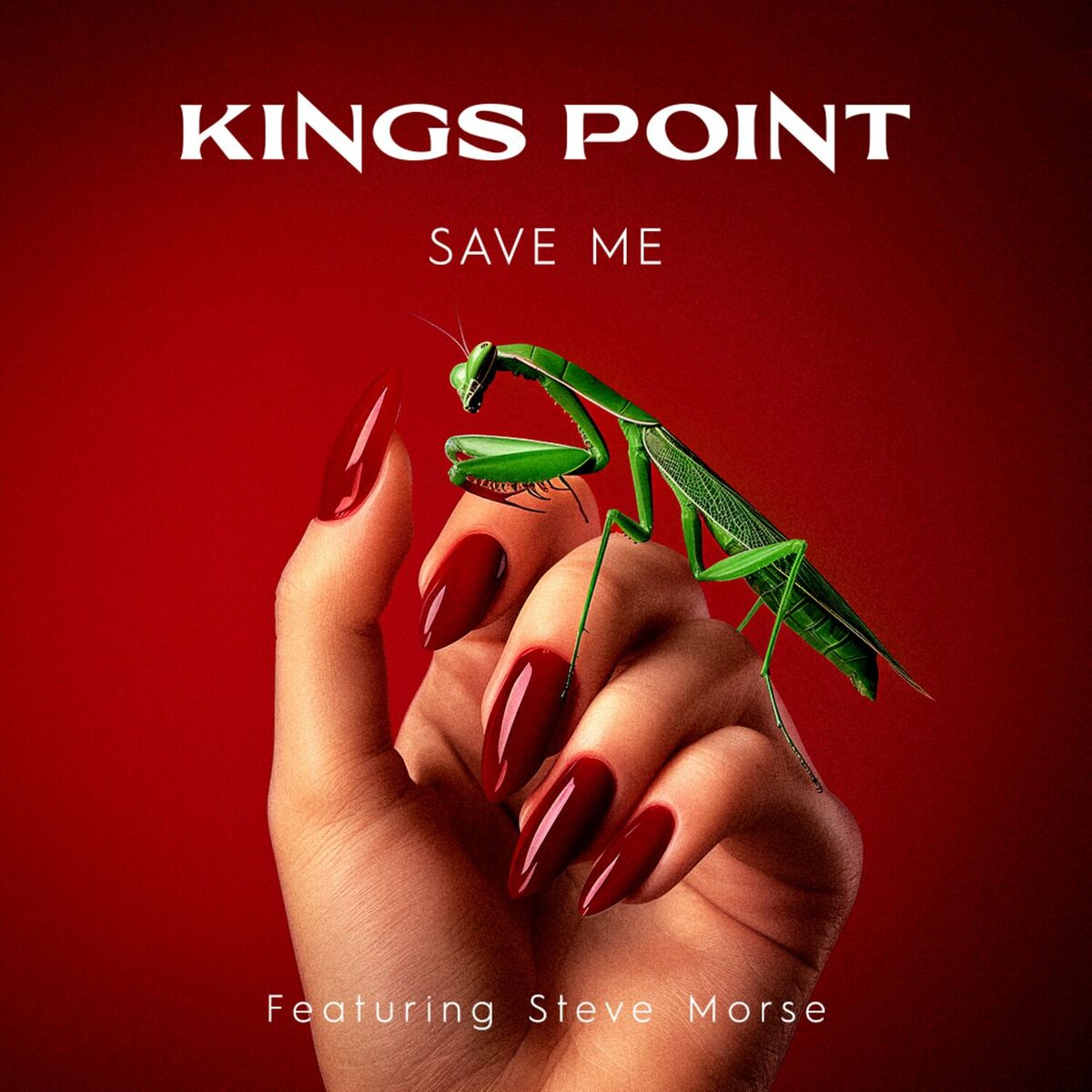
Steve Morse contributed guitar solo to the single Save Me by a Croatian band called Kings Point. The track will also appear on their upcoming debut album Surrender, produced by none other than Bob Ezrin, so that explains at least one step of how on Earth… Continue Reading »
Continuing in the vein of In Rock Around the Clock, here’s another neural network hallucination — Burn as if it was recorded by a swing band. Sadly, the Gershwin’s riff in the title track went well over the silicon head. Anyhow, might be worth a chuckle, but not much more. Continue Reading »
I trust everybody survived the preceding festivities with nothing more than indigestion. After being away on tour for a large part of the year, I finally returned home to spend Christmas, etc. with my family. The tour was one of the best, we all agreed on that. So massive thanks to our heroic crew and a huge thank you to all who supported us last year, the year of =1.
Continuing on the slow news week theme, here’s something for that hangover morning — a Burn documentary, opinionated by a bunch of people most of us never heard about. Of the redeeming qualities, it has input from the ubiquitous Glenn Hughes, and from John McCoy (of all the people). The archive footage includes bits of Doing Their Thing, the Leeds Polytechnic project, Cal Jam, and the Last Concert in Japan. Continue Reading »
![[hand]](/hs-pics/portraits/hands/glover3.jpg)
![[face]](/hs-pics/portraits/faces/paice2.jpg)





 Unauthorized copying, while sometimes necessary, is never as good as the real thing