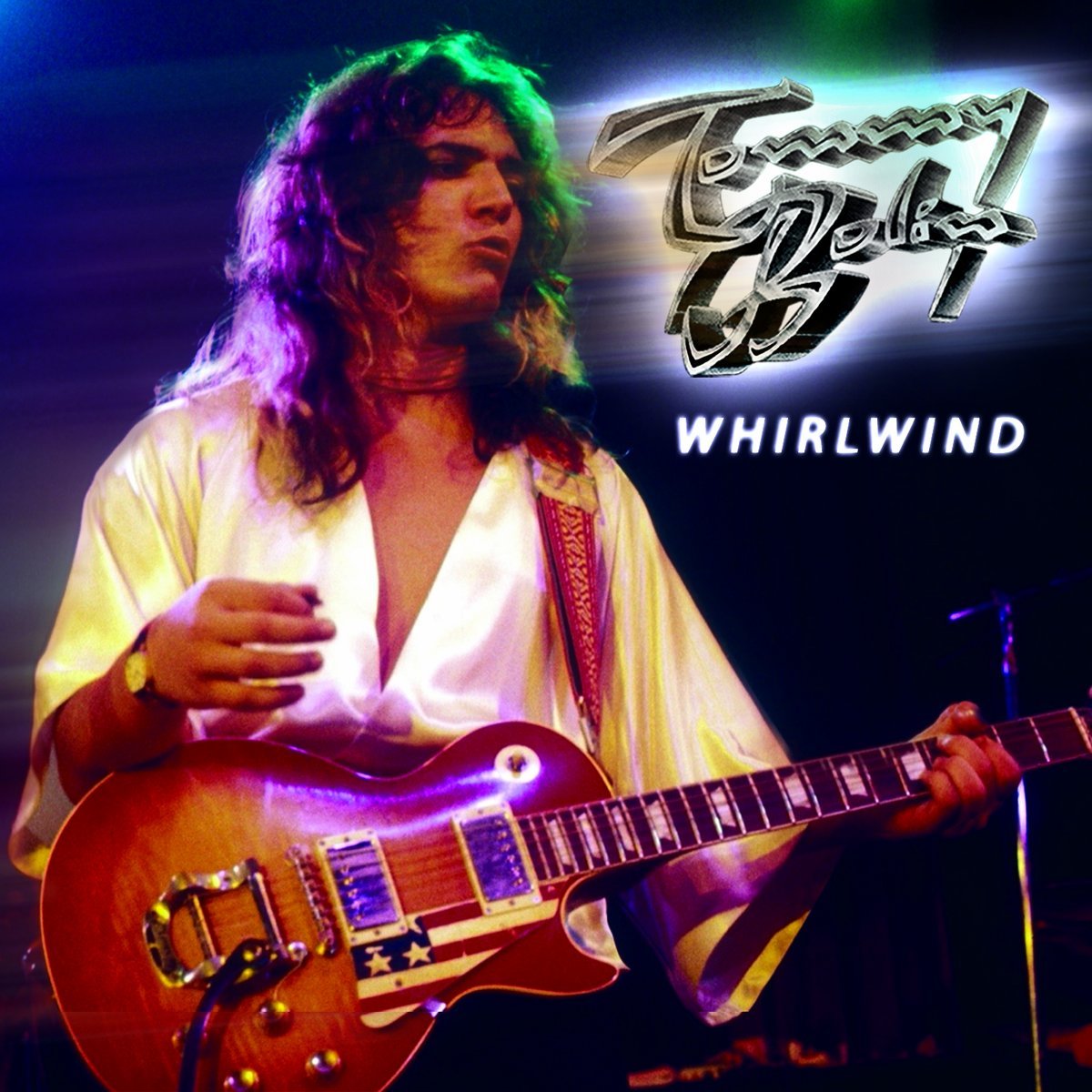
The Tommy Bolin Archives are releasing a 2CD set of previously unreleased material called Whirlwind. The set includes demos and outtakes from his solo album Teaser, his jazz-rock band Energy and material he was working on for his next album before his death in 1976.
Track list
Disc 1
Cucumber Jam
Heartlight
Hoka-Hay!
Don’t Worry ’Bout Cash (Acoustic Version)
San Francisco River
Rock-A-Bye
Dungeon
Alexis
Gotta Dance (Take 2)
Spanish Lover (Instrumental Version)
Sooner or Later
Disc 2
Red Skies (Instrumental Version)
Way It s Always Been
Sleepwalker (Instrumental Version)
Leave Other People Alone
Marching Bag (26 Minute Original Version)
Wild Dogs (Acoustic Version)
From Another Time
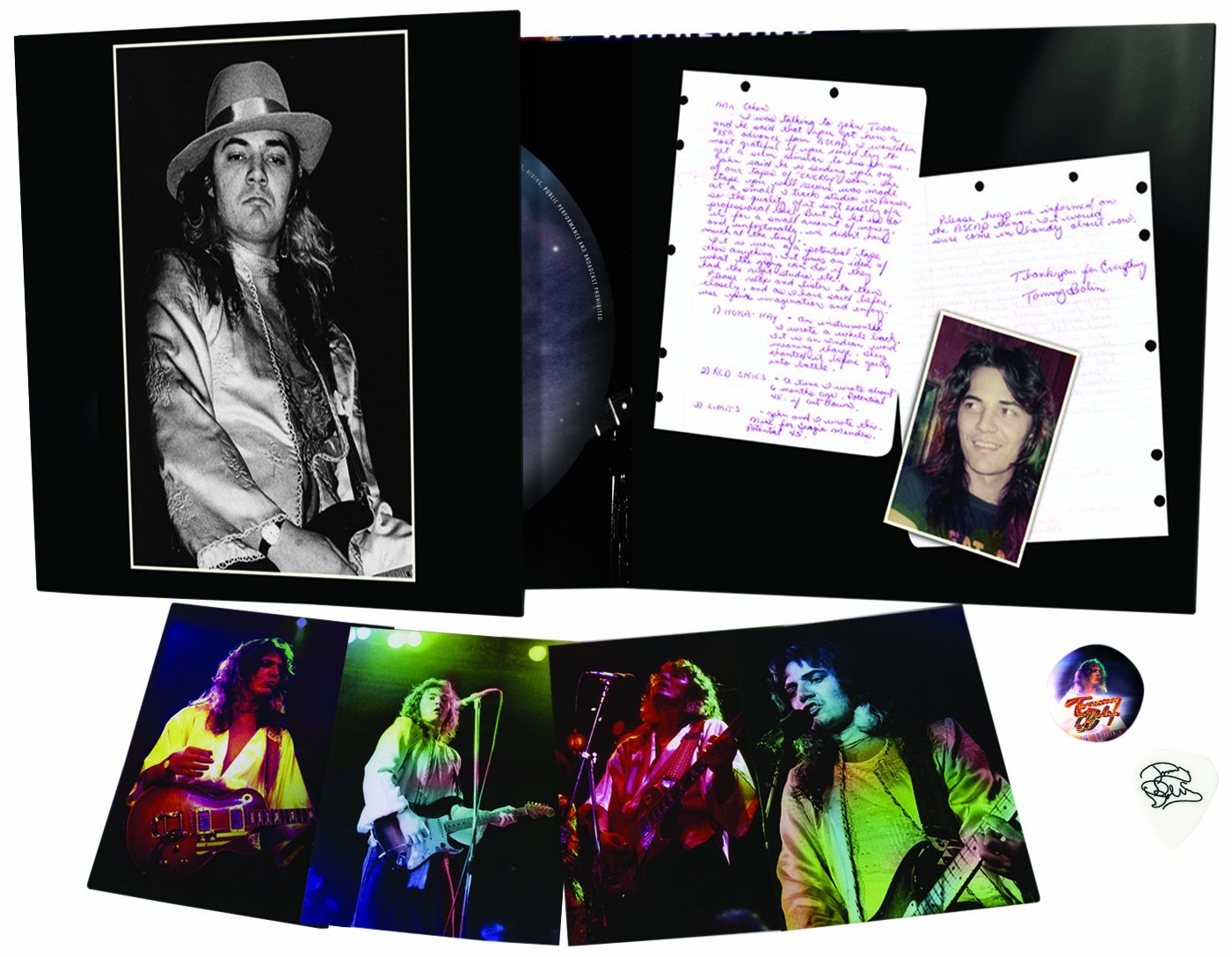
The set will be release on August 13 as 2CD digipak, double vinyl album, and deluxe box edition, limited to 1,000 copies. The deluxe edition will include the 2CD digipak plus 3 postcards, Tommy Bolin signature guitar pick, collectible patch and a souvenir pin.
Thanks to Jim Sheridan for the info.
Edel/earMUSIC has announced that the third single from Now what?! will be Above and Beyond. They are holding a competition for the graphic design of the new single:
earMUSIC and Deep Purple will pick one of your works, as an inspiration for the final cover for the new single, or possibly as “the” cover. Details about formats and B-sides are not known to this date.
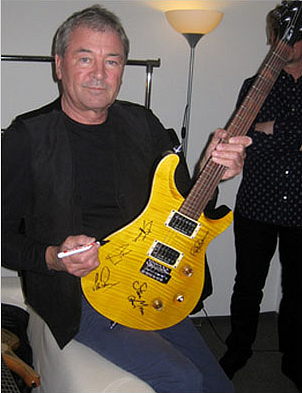
We will also extract a lucky winner from everyone who has submitted a design and the German made Fame guitar signed by all members of Deep Purple in the picture will be yours.
JLT solo album “Second Hand Life” contains a song co-written by Joe Lynn Turner, Ritchie Blackmore¸ Jim Peterik and Roger Glover. What is the name of the song?
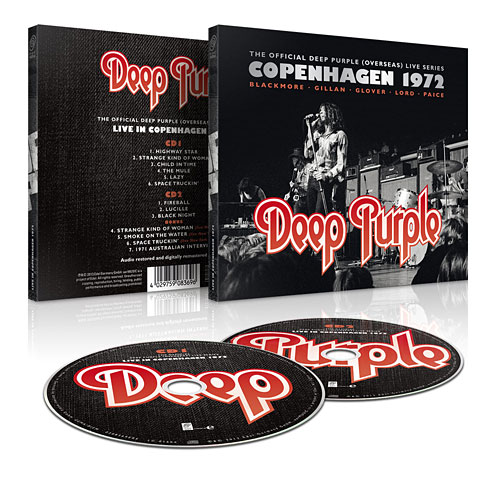
“Copenhagen 1972” is the second release of the earMUSIC “The official Deep Purple (overseas) live series”.
While “Paris 1975” features Deep Purple MKIII in their final days, “Copenhangen 1972” captures the legendard Deep Purple MKII at the peak of their career. Same as the Paris show, Copenhangen isn’t a new release.
The recording is basically the soundtrack to the “Live in Concert 1972/73” video (better known as “Scandinavian Nights (Live in Denmark 1972)” in Europe) and reintroduces three MKII bonus tracks of the video which were left out on the Sonic Zoom CD release. In addition to these tracks (recorded on May 29, 1973 in New York at Hofstra University, Hempstead, Long Island) a track called “1971 Australian Interview” has been included as additional bonus.
The main show, recorded at the KB Hallen in Copenhagen, Denmark dates to March 01, 1972 and shows Deep Purple right before the release of the “Machine Head” studio album, Ian Gillan introducing the opening number “Highway Star” as “What we got is a new song. It’s one of the next album we got coming up. …”. While a couple of Machine Head songs made the first of their now everlasting appearances, the show also included a rare live version of “Fireball” which had been replaced in the setlist by “Smoke On The Water” about a week later.
Originally recorded as a TV feature, the recording – although remastered – still shows some weaknesses soundwise, especially when compared to more prominent recordings like “Made In Japan”: during the first tracks, guitar and organ are low in the mix while while drums and vocals dominate the scene, but this gets better during the following numbers. Contrary to the sound the band performance shows no compromises.
The bonus tracks, sound better than the Copenhagen show but sadly offer just a small part of Deep Purple 1973. The interview is ok for a one time listen, offering standard topics like the audiences being “really fantastic”.
The discs are packaged into a slim digipak with one disc sitting right above the other which means disc juggling and some unavoidable scratches are going to happen every now and then.
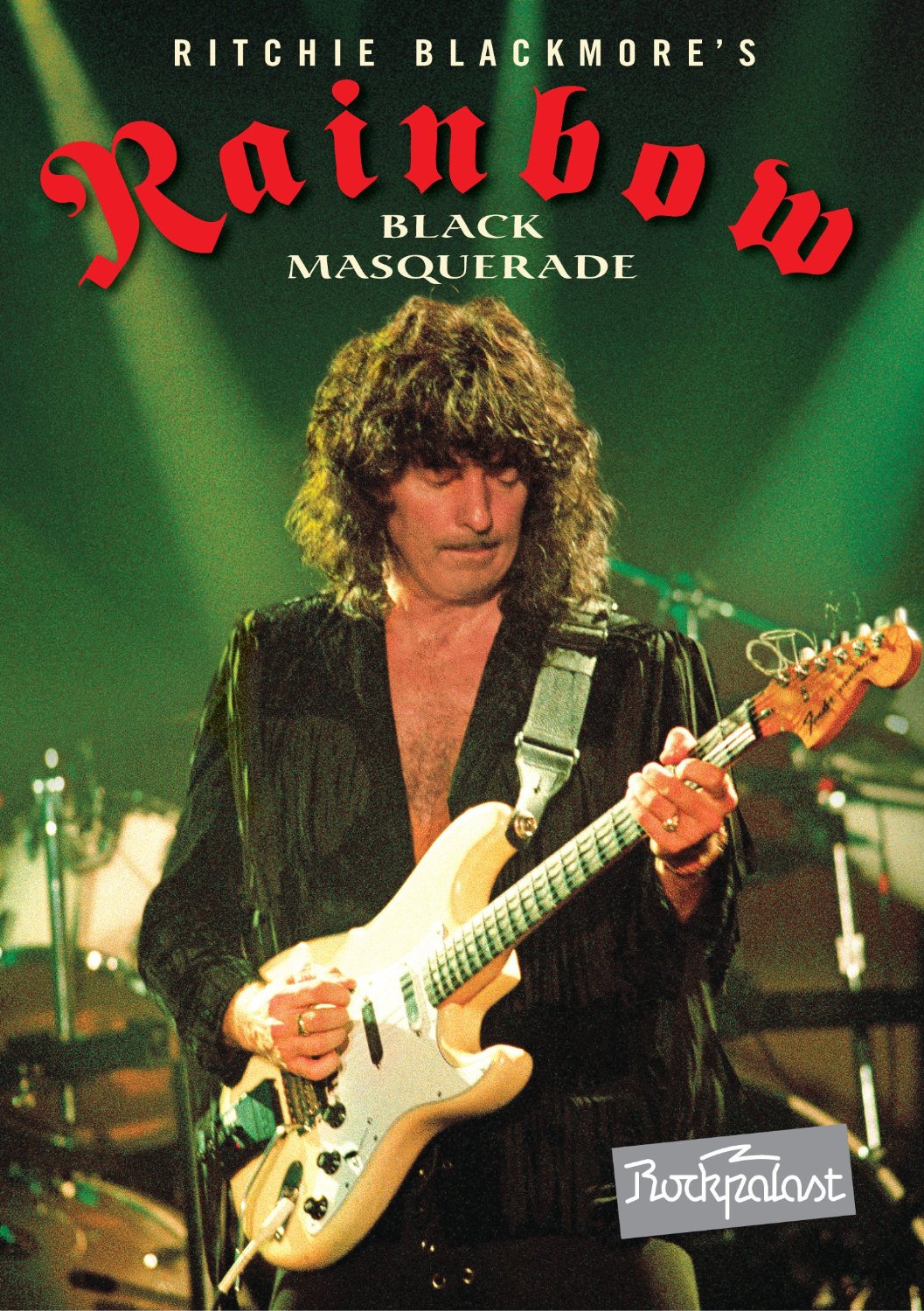
The much bootlegged Rainbow show from Philipshalle Düsseldorf on October 9, 1995, is now going to be released officially through Edel in Europe on August 23 and Eagle Rock in North America on August 27, on CD, DVD and digital download. That was the only performance of the last incarnation of Rainbow to be recorded on video professionally, for the German TV show Rockpalast.
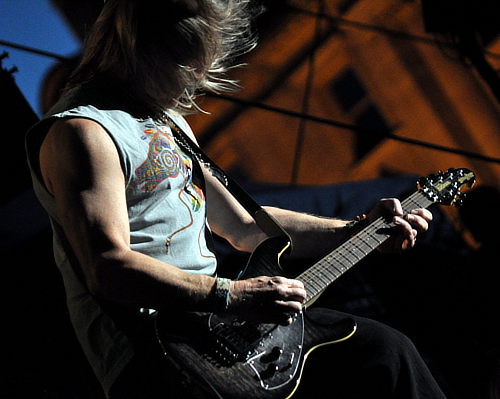
Steve Morse did this interview during the recent visit to Georgia. He talks about his career, playing with G3, Above and Beyond, why the Y2D has a 5-position switch, Bach as metal, and many other things:
Bonus points to everybody who can figure out what Paicey is saying in the background 😉
Pete Makowski has published on his Facebook page an interview he did last year with self proclaimed Deep Purple fan Lars Ulrich:
How did you end up getting to see Deep Purple when you were only nine years old?
Lars: There was a tennis tournament at KB Halle that started on a Monday morning and Deep Purple played there the night before and for some reason they invited all the tennis players to come down to the concert. My dad (Torben Ulrich, former professional tennis player) invited me along. It was the spring ’73 and Purple were promoting Who Do We Think We Are and I believe Gillan had handed in his letter of resignation. But what the fuck do I know? I was nine years old. I remember Ritchie Blackmore throwing up his guitar in the lighting rig, rubbing it against the speaker cabinets and playing it with his ass, Jon Lord was waving the beast around, Ian Gillan was hidden behind a curtain of hair, playing the bongos, Roger Glover was holding the beat down while ‘little’ Ian Paice was sitting back there with his specs on doing his thing. I had never seen anything like it and was completely blown away. It was the biggest, loudest, coolest thing I’d ever seen.
Why do you think Purple were so popular in Europe?
Lars: Zeppelin never registered on the same level when I was growing up, they were more of an American thing. There was also a perceived image of them. Blackmore was very visual but he wasn’t posing in a way like Plant with his open shirt, sweaty chest and ‘I’m a God come back to the hotel room and blow me’ attitude. I think the working class fans had a tighter connection to Purple. I don’t mean to be disrespectful I’m just trying to analyze it. I have the deepest admiration for Led Zeppelin Official but it was a different thing. When I was growing up in Copenhagen, it didn’t sound as hard and I didn’t connect to it like I did with Purple and Black Sabbath.
GUITAR WORLD: Now What?! is Deep Purple’s first studio effort in eight years. Why did you decide to make the album now?
Actually, I was one of the guys asking the same thing! My vision was every tour we’d do another song and just release it on the web site. I’d say, “Don’t even try to sell it, because things are different these days as far as how people listen to music.” But the rest of the guys were like, “Well, this is what we do, this is what we’ve always done. So let’s do the best studio album we can.” And Bob [Ezrin] agreed. So I got into it wholeheartedly.
You cover a lot of stylistic ground on the album. There are plenty of straightforward rockers, like “Hell to Pay” and “Weirdistan” but also mellow, jazzy cuts, like “All the Time in the World,” and more epic tunes, like “Above and Beyond.”
I think we just naturally do that, because Ian Paice is one of those drummers that can play swing-type stuff as smoothly as rock. So it leaves room for a lot of different feels. “All the Time in the World”: the verse in that is kind of slinky and relaxed but still has a little bit of swing to it. And “Above and Beyond” was me sort of pushing the band musically in a certain direction. I was imagining an orchestral background mix with sort of a Zeppelin-y heaviness. And chord-wise I guess it’s a little more proggy, more like the kind of thing I might have brought into a Kansas writing session. Lot of different triads over the tonic, which sort of stays the same. So there were a lot of different ideas.
One of the great guitar spots on the album is the intro to “Uncommon Man,” which begins with an extended, unaccompanied solo from you. How did that come about?
That was Bob, pure and simple. I don’t think I would have thought to do anything like that. But he came to one of our shows, and afterward at the studio he said, “I want you to do something like you did at the concert.” And I said, “That was improv.” So he said, “Well, then do an improv. You’re rolling.” We were all in a circle looking at each other, and I just started playing like I would live. And Don [Airey] has super-incredible ears, so he heard what I was doing and just followed along. Then when Don started leading with the chords, I had to listen and try to follow him. And if you listen to the song, there’s one chord where I didn’t quite get it. There are a couple notes in one of the runs that don’t completely match. I meant to do that! [laughs] But it was just one of those moments where it was the entire band doing the take and there was no way to fix it. It was literally a moment in time. And I love when we keep takes, especially when it’s the first take. Even if it’s not perfect, it’s really cool to have those spontaneous moments.
That was just a preview. The complete interview will appear in Guitar World August 2013 issue (the one with Jeff Hanneman on the cover).
![[hand]](/hs-pics/portraits/hands/paice1.jpg)
![[face]](/hs-pics/portraits/faces/glover3.jpg)




 Unauthorized copying, while sometimes necessary, is never as good as the real thing