Newspaper The Courier has another piece of Scottish Purple history: a picture of the band taken backstage at the Caird Hall in Dundee on October 15, 1970. It is published as a part of their 1970s illustrated nostalgia trip. Check it out in The Courier.
In other trainspotting news, a cassette tape with handwritten label Rainbow — Rainbow Rising was spotted all the way out in New Zealand on the UK TV programme The Repair Shop. It was series 11, episode 20 from 2023, if you are really inclined to track it down.
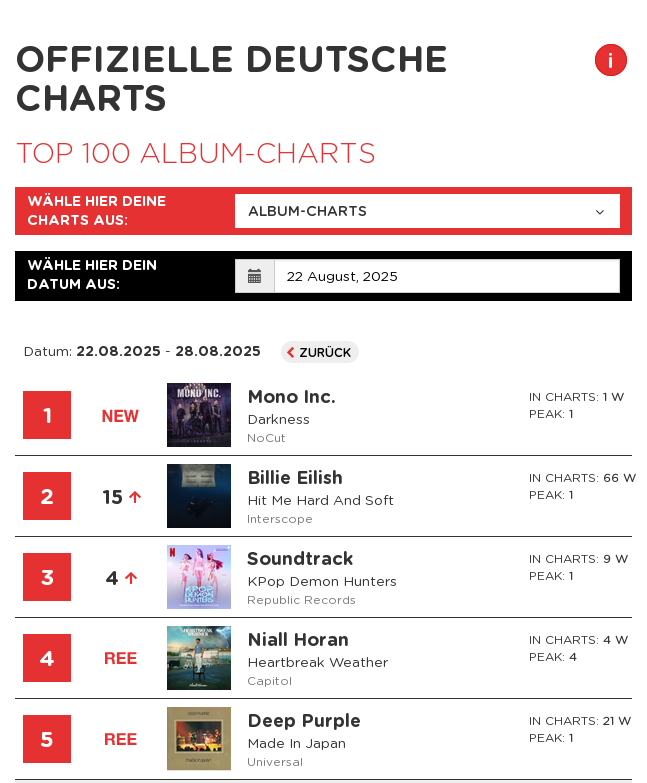
The newly remixed and reissued Made in Japan managed to re-enter the charts. It has reached to the respectable #5 on the Top 100 Album chart in the Purple heartland of Germany (beating the new album of teens’ darling Laufey, which only managed #11 on its debut the week after). It dropped to #82 the next week.
The reissue also reached #90 in the UK Official Albums Chart (the 2014 remix was at #71) — down from #21 on the mid-week chart. It also appeared at #8 on the Scottish Albums Chart, at #10 on the Albums Sales Chart, at #23 on the Album Downloads Chart, at #10 on the Physical Albums Chart, at #14 on the Vinyl Albums Chart, #28 on the Record Store Chart, and #2 on the Rock & Metal Albums Chart. All for the week ending August 28, 2025, with charts reflecting sales for the previous week.
Let us know in the comments if the reissue managed to chart in your country as well.
Thanks to Tobias Janaschke and Micke for the heads-up.
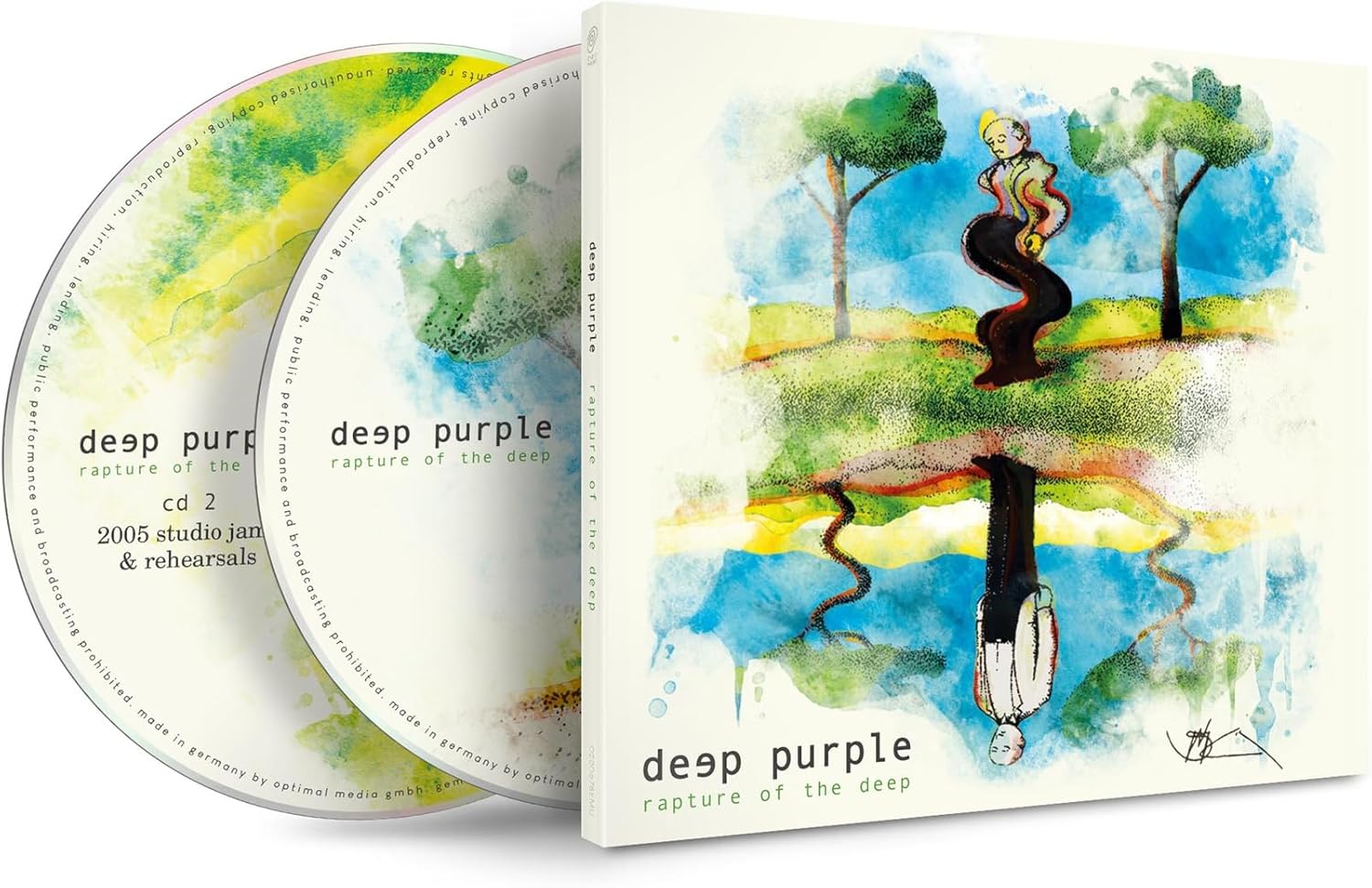
The Rapture of the Deep remix is out, and first reviews started to appear. Here’s one from the Loud Hailer:
On the 20th anniversary of the original album release, they’ve decided to present us with a remixed/remastered version of Rapture of the Deep. The original album was composed and recorded during a particularly uncertain time for the band. At the time, they didn’t even have a record label. Not as radical as the remixed version of David Bowie’s Never Let Me Down, which introduced new compositional elements, scrapping others, this Roger Glover-supervised version is less intrusive. It offers a distinct perspective into their creative process. It brings the keyboards more to the forefront, battling more prominently with Morse’s guitar. Everything sounds crispier and more dynamic.
Bob Daisley recently appeared on the Artists On Record podcast, and what distinguishes this interview, he was answering questions from the listeners. The bulk of the conversation revolved around Ozzy, but there were a couple of questions about Rainbow (hint: look for segment titles in the progress bar). Continue Reading »
Guitar World has an interview with the Swedish session man Tommy Denander, who has more than 3,500 albums to his credit — from Michael Jackson to Jeff Beck, to Alice Cooper. He is also one of the go-to session musicians for Bob Ezrin, so you might guess where this is going (and we’ve covered the story back in 2017).
What about your rather minimal appearance on Deep Purple’s Infinite (2017)?
“When Bob Ezrin invited me to help with Infinite it meant I’d completed a triple of posters from my wall in the ’70s! They were almost done with the album, but Ian Gillan wanted to re-record his vocals and Don Airey wanted to add a keyboard part.
“They were in Stockholm and I worked at the biggest studio in Sweden, so it was perfect. Roger Glover and I recorded Ian’s vocals; it was stunning how professional these guys were. Don came over and nailed his part in one take, too.
“Then Roger said, ‘We’re missing one chord on the guitar.’ I said, ‘Can we get Steve Morse over from the hotel?’ Roger said, ‘No – Bob says you’re a great guitarist, so you can do it.’ I was like, ‘Did Roger Glover just ask me to play on a Deep Purple album?’
“I grabbed my Kemper and my VGS guitar. I knew that Steve used ENGL amps, so I found a profile that matched the recording perfectly. Roger was impressed! He showed me the missing chord – a missing D on a breakdown – and I recorded three takes: two mono for left-right panning and a stereo one with a small chorus.
“It hit me that I’d just had my Spinal Tap moment. I’d been playing guitar full-time for 25 years at that point, and when I got to play on a Deep Purple album it was just one chord!”
Read more where it came from, although there’s nothing else Purple related.
Classic Rock has a feature on Glenn Hughes’ appearance on a KLF track America: What Time Is Love?, although there is little that we didn’t know from before.
All they needed was someone with a screaming voice to match the song’s beefed up sound. Enter Glenn Hughes.
“We were originally supposed to be doing the song with Axl Rose of Guns N’ Roses, but he never turned up to the session,” The KLF’s Bill Drummond tod Joel McIver, co-author of Hughes’ 2011 autobiography Deep Purple And Beyond: Scenes From The Life Of A Rock Star. “I can’t remember who the fuck suggested Glenn, but as soon as they did I said, ‘What, that guy who I saw fronting Trapeze in 1971? Great idea!’”
A recording of a Deep Purple performance in Lyon, France, on March 16, 1973 has been posted to YouTube. It is purported to be from an FM radio broadcast, but don’t get your hopes too too high. It sounds more like an audience recording, albeit a good one for the time. Continue Reading »
[Aug 25 updated: part 13] In anticipation of the upcoming reissue, powers-that-be are teaspoon feeding us what Roger Glover and Ian Paice have to say about Made in Japan. This post will be updated if and when further chunks are released, which will bump it in the News in brief column on our front page. Continue Reading »
![[hand]](/hs-pics/portraits/hands/mcbride2.jpg)
![[face]](/hs-pics/portraits/faces/airey2.jpg)




 Unauthorized copying, while sometimes necessary, is never as good as the real thing