![[hand]](/hs-pics/portraits/hands/glover2.jpg)
![[face]](/hs-pics/portraits/faces/glover2.jpg)




The horse that wasn’t iron
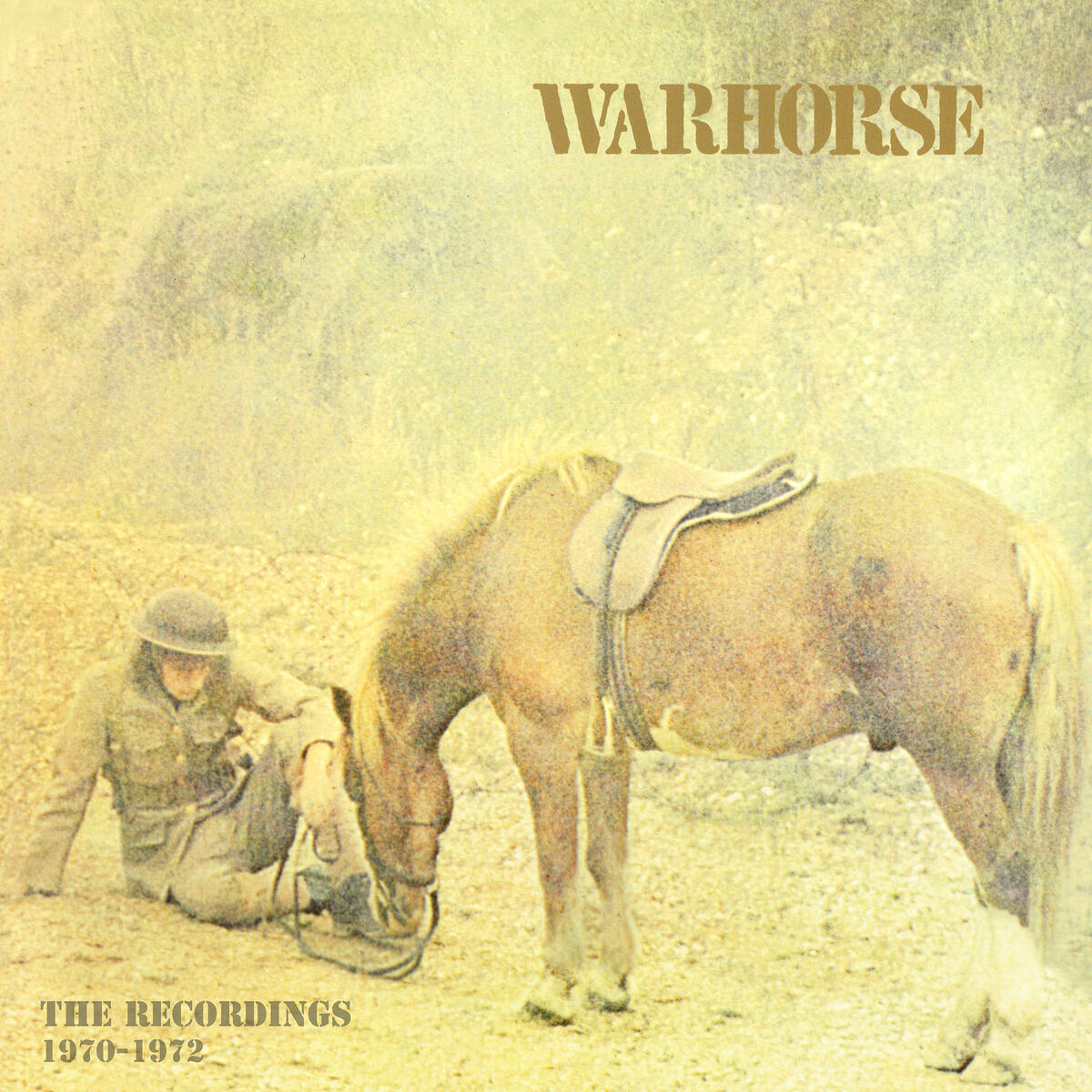 Back in 2024, an outfit called Defenders of the Faith published an interview with Nick Simper on the occasion of the two Warhorse studio albums being reissued. That interview completely slipped under our radar, until now.
Warhorse’s self titled debut was significantly heavier than anything you had done with Deep Purple. In the same breath, Purple were pushing the envelope that year as well with In Rock. Did you feel a sense of rivalry with Purple or was Warhorse rather a musical reflection of the ear, hard rock subsequently morphing into heavy metal?
NS: Not really. Jon Lord had to say in an interview, somebody asked why I wasn’t in the band any longer. *laughs* He told a bit of a lie and he said, “We wanted to go in a heavier direction and he couldn’t do it.” I was really, seriously annoyed with that because not only was it a deliberate lie, but I was pushing for Purple to become heavier all the time. Of course, there was all the classical stuff going on which was kind of undermining what I wanted to do really. Everybody went with it because we didn’t have much else going on at the time *laughs*. It seemed a good idea, but after a while, it was kind of wearing a bit thin. Ritchie Blackmore and myself, we came from pretty hard musical backgrounds.
That was the only kind of thing in the back of my mind. What I did, I wanted to do it louder and noisier and heavier than anything they did. It was funny because when I was working with Marsha Hunt, we worked on 3 or 4 shows where there were quite a few acts on them. We kept coming up with Deep Purple and it was not embarrassing, but for me, they were seeing me doing something I wasn’t happy doing. After we started Warhorse, I was dreaming of the day we’d be on the same bill as Deep Purple and it never happened, ever *laughs*! There you go. That’s the way it was. A lot of people, they sort of compare it and they say, “There’s echoes of Purple there.” I think, well, it was the same sort of lineup. We were striving for the same kind of things, I guess. The Hammond organ sound and loud guitars, there’s gonna be some kind of similarities, isn’t there? You can’t help it *laughs*.
Read more in Defenders of the Faith.
Thanks to Uwe Hornung for the heads-up.
 Unauthorized copying, while sometimes necessary, is never as good as the real thing
Alas!, where would this site be without its devout and ever watchful Judas Priest fans … We‘re aaaall Deeeefenders oooof the Faaaaith! @02:30 …
https://youtu.be/7j9dkh6CRpU
And the requisite lovely JP liturgy graphic novel nonsense to go with it:
https://www.reddit.com/r/judaspriest/comments/1dk16oc/the_metallian/
That thing always looked to me like a garish Japanese Power Rangers toy mishap of ELP‘s iconic and much cooler „Mk I Tank-meets-Armadillo“ machine-creature.
https://media1.jpc.de/image/w1155/front/0/4050538180053.jpg
January 19th, 2026 at 03:43I can see why Nick is emotionally attached to Warhorse and they are of course a legitimate part of the ever so colorful Purple Family legacy, but that is where all comparisons to the mothership must stop. Both Warhorse albums sounded dated already upon release, especially when compared to contemporary Purple product (the debut came out almost half a year after In Rock in 1970, the sophomore effort Red Sea the same month as Machine Head in 1972). In Rock’s sounds, performances and songwriting triggered a new hard/heavy rock (or underground or progressive rock as it was then called) era, the first Warhorse album sounds like a 1967/68 release (and back then, in those musically fastmoving times, two years or more could make all the difference). The differences are even starker when one compares Red Sea to Machine Head, a sleek product where nothing sounds wrong and which is a highly compressed time capsule of inspir- and innovation while Red Sea was stylistically bumbling at best.
Of course, Purple had different budgets, but those can only take you so far if the ideas just aren’t there. If there was retroactive proof necessary that jettisoning Nick and Rod in favor of Roger and Big Ian was a conditio sine qua non-occurence for Purple’s deserved path to fame, then In Rock and Machine Head delivered it in spades.
People sometimes wonder what Little Ian meant when he deemed Nick’s bass playing old-fashioned (“Anything he played, you knew where he came from.“), but it’s pretty much like U.S. Supreme Court Justice Potter Stewart’s 1964 classic quote in Jacobellis v. Ohio discerning porn from erotic art, where he admitted he couldn’t define “hard-core pornography”, but could recognize it: I know it when I see it. With Nick and Roger, you know it when you hear them side by side though they both came from the same era and were less than a month apart in age.
January 19th, 2026 at 13:43I’m reading the book “Seven Decades of Deep Purple”. And I have to say that I suspect that both Jon Lord and Ian Paice, after the (unsympathetic) firing of Evans and Simper, tried to adapt the story so that it would later argue well for the firing. We know from other stories that Lord and Paice were good at not taking sides.
January 19th, 2026 at 14:38Oh sure, Ole, neither Little Ian nor Jon liked to get their hands dirty and ruthless Ritchie (= frequently wrong, but never in doubt when setting about something 😂) was always a convenient scapegoat. Paicey and Jon didn’t stand up for Rod + Nick and they didn’t stand up for Big Ian + Roger either. From Mk IV, after Ritchie was gone, they at least pulled the carpet from underneath by leaving themselves, knowing that there would be no DP without them. When Ritchie wanted to get rid of Big Ian again, support for the latter from Paicey + Jon was meek at best, only when commercial fortunes of Mk V did not turn out to be what was hoped for, did they – prodded by the record company and management who wanted Mk II back together – rediscover Big Ian as their singer.
So indeed, their backbones could be pretty adjustable.
January 19th, 2026 at 23:33Es cierto más allá de la historia y de los méritos es como dijo Paice ” es en negocio” pero Lord ( q lo amo) era amigo de Simper y luego lo traicionó y peor aún Paice entró a DP gracias a q Evans lo conocía de The Maze lo trajo a Paice y luego no tuvieron problemas en despedirlos (ni hablar del pobre Bobby y los cigarrillos)…en fin como se dice en Argentina ” a cara de perro”..Abrazo amigos..PD también recordemos la confusa salida de Morse,,,,
January 19th, 2026 at 23:37the interview is a little ‘out’ in one aspect. Rod Evans was inducted into the r & r hall of shame. It was only Nick that was wrongfully snubbed wasn’t it? Anyway, in regard to early and original band members leaving or being dumped unceremoniously from certain bands, it has happened a hell of a lot. Deep Purple, Jethro Tull, Pink Floyd, Yes, The Who, The Beatles and on and on we could go. It is shame when some are treated in a callous and disrespectful way. Nick was one of those who was treated with contempt it seems. As long as he has enjoyed his life and he moved on as such, that was the best for him. He will always have that proverbial ‘what if’ query to deal with at times, that is only natural. Good luck to him. Cheers.
January 20th, 2026 at 00:31Nick once told me that in Deep Purple Mk I, Jon was the one who had a schedule for how everything had to work. He had charm, the contacts, and the management mainly spoke to him – probably also because he was the oldest band member and Deep Purple was still a young band at the time. Accordingly, he was the one who negotiated everything and spoke to everyone. Therefore, he was also the one who had to come up with a reasonable explanation for the line-up change and the band’s new direction that came with it. And he repeated that explanation in later interviews as well. I also think it’s nonsense to say that Nick wouldn’t have supported the heavy rock direction. But ultimately, it wasn’t just about that, it was also about songwriting, and in that context, I consider Roger to be the more creative bass player, who also evolved into a good producer. However, at first, Roger was only hired because Jon, Ritchie, and Ian Paice really wanted Ian Gillan in the band. The fact that Roger and Ian presented themselves as a songwriting duo, which they were in Episode Six, was a bonus but put to the test immediately. As everyone knows, they definitely pulled it off and the chemistry of Mk II was fantastic from the start. The decision to kick Nick and Rod out of the band was probably a matter of less than an hour of jamming together. The first Mk II single “Hallelujah” already showed very well what was about to come and Roger even recorded it using Nick’s bass guitar. That must have been the cherry on top for Nick.
January 20th, 2026 at 01:05Nick waived his Purple royalties in a court settlement in 1970 or so against a lump sum payment and parts of DP’s PA system (which was then used by Warhorse). Since then he has not been in any business contact to the Purple organization, there was simply no need or reason to. I still think that that is the reason why he fell under the radar with the Purple organisation when the RRHoF asked for a list of past and present members. Rod Evans otoh, contrary to popular belief, did not lose his royalties following the Bogus Purple affair forever, but only for a period of 20 years – they had resumed when the RRHoF finally knocked on the door.
There is no other explanation for leaving Nick out but a clerical error (albeit uncorrected by the Purple management until it was obviously too late). The RRHoF had no reason to exclude the bassist of the first three DP albums who had played on a major US hit like Hush while at the same time including the – fallen from grace as he was – singer of that same line-up. They did not exclude anyone else from the Mk I, II & III line-ups, but – curiously so, he had been the main songwriter on CTTB and his joining DP was big news in 1975 – only Tommy Bolin from Mk IV.
January 20th, 2026 at 09:03Every time Nick speaks of Warhorse, it’s amazing how much praise he heaps on the group’s singer Ashley Holt. Whose voice seemed to me to be the main millstone around the group’s neck. Guess there’s no accounting for taste!
@3 Ole – 100%. The group’s policy has always been to speak well of other current members, but say whatever they please about people who are no longer in the band. As we have seen most recently with Steve Morse.
Lord seems to have adhered to this policy whether inside or outside Purple. When he remained in Whitesnake after Coverdale fired Paice, he said the dismissal had been the correct thing to do. However, IIRC, after re-uniting with Paice in DP’s 1984 revival, he changed his tune and said that Cov had been wrong to fire Paice.
@7 Tommy – Yes, how ironic that Lord claimed Simper wasn’t up for the hard rock direction in which Purple wanted to go, when in fact the opposite was true! Nick was vocal not only about his desire to rock harder, but his lack of enthusiasm for Jon’s pet project, the then-upcoming Concerto. That must have rankled. Much more likely the true reason Jon threw his buddy under the bus.
“The decision to kick Nick and Rod out of the band was probably a matter of less than an hour of jamming together” – this may be true of Nick, but Gillan was in the studio that day to try out as the band were already scouting potential replacements for Rod.
The official story is that DP decided to give Rod the boot during the final MKI US tour in April-May 1969. But more likely Ritchie had already decided, and spent that tour bringing JL and IP around to his way of thinking.
Supposedly RB first saw Robert Plant perform in March 1969, in Birmingham, and offered him the position of DP vocalist on the spot. If true, that would have been before DP had even finished recording their third LP!
Since Rod seems to have had one foot out the door of his own volition, it’s a shame the band didn’t discuss matters openly and organise a smooth transition.
Nick lost his position through an unlucky combination of circumstances, and Ritchie’s ruthlessness. Ritchie recently said the long and short of it was that the band “sacrificed” Simper, who he thought was the better bass player, in order to acquire Gillan. Which implies what has sometimes been claimed elsewhere, that for Gillan to join, he required the band to take on Glover as well, as a package deal.
Gillan has claimed that he DIDN’T stipulate this. But there was no love lost between IG and NS. Which may have factored into Nick’s ouster in some way.
January 20th, 2026 at 21:26not sure why Tommy Bolin would or should be a shoe in for the circus induction. DP were spent by then and in no way was that lineup a forceful impact on anything to do with musical influences or the like. They were done and dusted by most accounts and myself and many others would never have expected anything different as to Bolin’s ‘exclusion’ from the hall of shame. If poor ole Nick Simper gets deliberately left off that list, Bolin had no chance in hell of being added to it. As many here have correctly stated, Coverdale and Hughes were incredibly fortunate to be inducted, all things considered. We all have a fair idea as to the bias of the hall of shame and it’s hierarchy. Knobs do things like that in business and politics, no surprises there. Cheers.
January 20th, 2026 at 23:11Ironically the original bass player for the Moody Blues, Clint Warwick was not included for their induction along with original guitarist Denny Laine. However there were a few people inside the Hall who corrected and influenced the Laine exclusion. If someone had done the same for Nick, he would have been inducted. If only Jon was still around at that time, he would have done that me thinks or at least attempted to. A chance to ‘put things right’ perhaps, in one sense. Jon Lord always deeply regretted the way that MKI dismissal was handled back in 1969 and no doubt he would have been deplored as to Nick’s exclusion in 2016. Cheers
https://ultimateclassicrock.com/denny-laine-rock-hall/
January 20th, 2026 at 23:39I think you guys underestimate how deeply entrenched Nick was with pre-Beatles English RnB and Rockabilly. When he was once asked what his proudest musical moment was, he did not say Deep Purple or Warhorse or Fandango, he said „joining Johnny Kidd & The Pirates“, early 60s UK heroes who recorded this single before the fateful car accident that took Johnny‘s life and hospitalized Nick for a while:
https://youtu.be/V7_VRMAkYNw
That (non-charting) recording is from 1966 (sic!), the same year The Beatles released Revolver and had hits like this:
https://youtu.be/9EqMmGlTc_w
https://youtu.be/O58ouPdjgo0
From today‘s view it seems like ages between those two types of music. The Beatles, although regularly derided on this site as a bunch of overrated mop hairs who couldn‘t play, had turned several pages – and written new ones – in the book of music history. What Nick was doing (and loving) was undeniably a thing of the past.
Now Naked Ian and Roger came from Episode Six, hardly a rock band, more a pop outfit. BUT: By nature pop music inhales current cultural influences (and subsequently incorporates them) more than the type of very traditional Brit early 60s RnB did which Nick preferred. Here are two Episode Six releases from 1966.
https://youtu.be/M5fFd9CJQ8E
https://youtu.be/YpGuEnyZc7w
Nick wasn‘t simply discarded because he had become inconvenient and Roger was part of a package deal. Nor was Roger in 1969 an automatically better bassist than Nick. But he was willing to embrace new influences and had fresher ears. He realized things like that music was moving into a more drum-centric direction and he paired with Little Ian much better and tighter than Nick who was more of a free form player OVER what Paicey did (which could have its own charm of course, I like Nick’s bass playing but it is to this day very 60s), thereby co-establishing that chugging bass & drums engine room tandem so crucial to DP Mk II‘s rhythmic “throb”. Never forget how Ritchie wanted In Rock to be more “danceable” than the Mk I output.
Name me one album Nick played on – I have them all – where he was playing – even for the time – cutting edge music? There is nothing there. As late as the late 70s, early 80s he’d be releasing songs that already in the early 70s had sounded like fallen out of time:
https://youtu.be/YVo0V8y4xsk
https://youtu.be/QNFlcSCqWNo
And even the Mk I recordings are dated by his bass playing. Not that he was the only culprit, on the first three DP albums there is loads of stuff that sounds quaint/unfashionable for 1968/69 when other bands were already beginning to leave the 60s behind and adopt a more 70s type rock sound, think of bands like Steppenwolf or The Doors:
https://youtu.be/1qBG318euHc
https://youtu.be/aKd6yarfkxA
And then look at how Mk I presented themselves and sounded, they were definitely not in sync with the approaching new times:
https://youtu.be/wrXA7D1_9uc
But in 1968/69, Ritchie still had open ears and he would continuously gauge new music developments. I think he realized that Nick could or would not follow him in this. Ritchie was keen to put his Joe Meek and Lord Sutch/Hamburg days behind him and forge something new, he needed the right sidemen for that. It is something he has done again and again in his career, teaming up over time with Gillan/Glover, Coverdale/Hughes, RJD, JoLT or, finally, Candice to head toward new musical turfs.
January 21st, 2026 at 05:11If you listen to Nick’s isolated bass playing here
https://www.youtube.com/watch?v=zkjgrYXesWM
and Roger’s isolated bass playing here (he really dosen’t get going until 01:31)
https://www.youtube.com/watch?v=0Z3wl0eEFJc
then it is evident that Nick didn’t sound as strident, “driving-the-bus”, consistent, pushy, yet supportive to Little Ian’s bass drumming, let’s not even talk about how Roger’s bass playing matured over the years, like the way he used syncopation throughout here to great effect:
https://www.youtube.com/watch?v=MTgyFvUlUJY
That’s not to say that Nick can’t play, I only saw the man compararively recently,
https://www.youtube.com/watch?v=6yYGewE6ntM
but Roger was in 1969 the player with more developmental potential (I believe Ritchie and Little Ian heard that immediately in the session) and more attentive ears. And he proved that in the years following no doubt.
https://www.youtube.com/watch?v=1mLryrT1ZMc
Roger’s contribution to the overall DP sound is regularly underestimated, even here.
January 21st, 2026 at 08:09Musicians being ‘left behind’. There are plenty of them, particularly at that late 1960’s into the early 70’s period. Nick Simper wasn’t the only one. That period evolved so fast too, some couldn’t or were not into moving that quickly. And while were are at it, Episode Six, best left were it was. Talk about a pastiche of what others had already done. Deep Purple MKI were light years ahead of them. As we are well aware, both Gillan and Glover have always been very appreciative of how lucky they both were at that time. Moving along and look at Jimi Hendrix, being left behind big time. Poor Jimi was bereft of new ideas from what we have heard after the fact and even read about. No doubt Jimi would have been doing plenty of thinking while watching and listening to the new breed of musicians and music being created in Britain and Europe. How long would have Hendrix lasted after the 1970’s boom. Peter Banks the original Yes guitarist was left behind too, out the door after two albums and in comes Steve Howe, much more eclectic, diverse and a songwriter too. What about Syd Barret with Pink Floyd. Forgetting his metal dilemma after the bad acid experiences for a second, how long would have that lineup of Floyd lasted once the 70’s kicked in. Jethro Tull and original guitarist Mick Abrahams. Not up for the fast evolving door that was in front of him and he gets left behind with a new guitarist arriving who was much more into diversity etc. Anthony Phillips in Genesis, out the door after two albums for a better suited solo journey. Some musicians evolve, some don’t and others are heading somewhere else. Every era and genre of music has its influences and styles that influence other musicians. Some move through it, others get swallowed up by it and some get the hell out of there. Jim Morrison is one example of that, no Doors band after his downward spiral and eventual escape. It was the best of musical times though, and fashion too (dare I say it). Cheers.
January 21st, 2026 at 10:49I was actually baffled that Tommy with his maverick image in the 70s was not posthumously inducted into the RRHoF as a member of DP. He was after all the first Yank to play with DP, came from having played on of the most successful (and influential –> Jeff Beck) jazzrock albums of the 70s, namely Cobham’s Spectrum, had James Gang credentials (recommended to the band by Joe Walsh himself), left an indelible stamp on CTTB (an album that at the time was hailed as a promising return to form for DP even by those parts of the press that had been critical of most of their work before) and played with DP at a time when they could still sell out US stadiums even if Stormbringer and CTTB could no repeat Burn’s US success (by the mid 70s heavy music was running a little out of fashion in the US in favor of acts like Peter Frampton and the beginnings of AOR/melodic rock). The Mk IV tour had not turned into a shambles on the American leg yet.
That DC and GH were included did not surprise me one bit: Burn was in the US a more significant album than In Rock (which suffered from poor distribution at the time) or Fireball and Mk III had been the line-up that reaped the rewards of Mk II’s groundwork plus saw endless exposure in the US via the ABC nroadcast of California Jam.
But any which way you look at it: Leaving Nick out of all people made no sense at all and could not be justified/explained except via sloppiest research of the band’s history. Nothing that applied to Rod Evans, who was inducted after all, did not also apply to Nick. His bubbling bass is very prominent on Hush.
January 21st, 2026 at 15:41@12 – Uwe, you may *think* Ritchie “realized that Nick could or would not follow him” in new music developments.
Ritchie *said* that he never thought of Glover as a bass player.
https://www.loudersound.com/features/ritchie-blackmore-the-lost-interview
And that Simper, who he thought was the better player, had to be “sacrificed” in order to get Gillan to join the band.
Which implies – if not a package deal of IG and RG – that, for whatever reason, Gillan joining the band meant that Simper had to get the boot.
We know that, when the band was forming, Simper had suggested to Blackmore and Lord that Gillan would be a good singer for the band. And extended an invitation, through a mutual friend, for him to try out. On his website he recounts the response the friend conveyed from Gillan: “He said Episode Six are going to make it big, and said he thought that you won’t get anywhere!”
https://www.nicksimper.net//nicks-story/chapters-18-25/chapter-18-getting-it-together-in-deeves-hall/
Nick then asked the mutual friend to tell IG that could ____ himself, IIRC from an interview.
Though he very much DID want the gig 16 months later, Gillan doesn’t seem like the kind of guy who would be happy eating humble pie. Maybe he didn’t want to face Simper? *Something* went down in the studio the day “Hallelujah” was recorded. But none of us were there that day to know for sure what it was, were we?
You have provided an example of Nick’s playing with Johnny Kidd, which does sound dated for 1966, yes, though not inappropriate for the record. What has that got to do with his subsequent playing in Deep Purple, which is much more adept – and, by the third LP, less free-form and starting to move into a more drums-and-bass-locked-together style?
Or Warhorse, here on “Beat-Club” (too bad none of their better / less worse tunes are available):
https://www.youtube.com/watch?v=tFlival8uOc&list=RDtFlival8uOc&start_radio=1
The song is nothing special, the intro is cribbed from “Wring that Neck”, and the singing is little more than yelling… Pretty dreadful, overall. Warhorse didn’t have a riff-meister like Blackmore, nor a tuneful singer. But does the bass playing itself seem dated by 1971 standards, or lacking in proficiency?
It’s a matter of opinion as to how dated MKI music sounds. It could even be argued that the psychedelic elements of their sound maintain a fresh charm to this day. Some of which was lost when MKII chose to narrow their focus and concentrate only on heavy riffs a la “Mandrake Root” and “Black Night”.
Does “Living Wreck” sound any less dated than MKI, other than having a different, higher-pitched singer? To my ears it resembles early DP more than it does the spacious elegance of “Born To Be Wild.”
January 21st, 2026 at 18:29According to the Hall’s website : “The Nominating Committee includes current Inductees, artists, historians, journalists, and other members of the music industry. They come together to create a ballot of eligible Nominees for the year. To be eligible for Induction as an artist (performer, composer or musician) into the Rock & Roll Hall of Fame, the artist must have had their first commercial release at least 25 years prior to the year of Induction and have demonstrated musical excellence, impact, and influence.” “Inductees are chosen by an international voting body of more than 1,200 Inductees, historians and members of the music industry, as well as the aggregate results of the Rock & Roll Hall of Fame’s annual online Fan Vote, which counts as one ballot.” “The list of Inductees for the current year is released with categories including Performer, Musical Excellence, Musical Influence, and the Ahmet Ertegun Award.” So somewhere in amongst all that, someone decides which individual band members are eligible or not, that is where the joking side of this is exposed. Who says, ‘oh, not him, he was only involved in a minor way, but we will let the others in’. That selective individual bias or neglect is where it is a sham. But that is Hollywood for you, isn’t it!. Cheers
January 21st, 2026 at 21:10Great album cover!! Never listened to or heard this one..
January 22nd, 2026 at 13:23“But does the bass playing itself seem dated by 1971 standards, or lacking in proficiency?”
Skippy, it certainly doesn’t sound like Roger’s pristine “pick & Ric”-work on Machine Head which was also recorded in (late) 1971! Nick wasn’t the only bassist that still sounded 6os in the early 70s (so did Geezer Butler for instance), but he just wasn’t an innovator either, there was little development in his playing except that he simplified it over time and played less.
But for the record: I’m no Nick Simper antagonist or I wouldn’t have driven by myself from Frankfurt all the way to Vienna and back just to see him two years ago. And I have some of his obscurest stuff in my collection. Nick’s bass lines were also among some of the earliest stuff I learned on bass in the 70s. I love his bass lines in Chasing Shadows and in the middle eight of Kentucky Woman where he really lets rip.
Lack of proficiency is not so much Nick’s issue, he’s fluid alright, but he is not as accurate and to the point as “clockwork” Roger, but then neither is Glenn Hughes who has perfected the art of cool slight sloppiness in his bass playing. Roger doesn’t have have that “human metronome” nick name for nothing, he’s very precise.
I actually agree with you though, Ritchie (and that interview you posted – thanks for allowing us to revisit that – shows both his best and his worst, namely callous and even mean sides) basically never had a good word for Roger’s bass playing, in my opinion unjustly so. He has repeatedly said that “Glenn Hughes was no doubt the best bassist DP ever had” and in a 90s interview with a Japanese music mag belittled Roger as “good, as long as it’s straight ahead rock’n’roll in eighths” while lauding Glenn as a “master in syncopation” (which conveniently ignores that Roger used syncopation very effectively in a lot of songs such as No One Came, Maybe I’m A Leo, Space Trucking or My Woman From Tokyo).
It’s also true that Roger joining Rainbow as a bassist was not Ritchie’s, but Don’s and Graham’s idea, and that Ritchie was only lukewarm about it, asking Cozy first if he could imagine Roger playing bass with him (Cozy had no issues with it).
If you ask me, there is something inherently abusive and toxic in Ritchie’s relationship with Roger and it is telling that Roger once said in an interview that Steve Morse made him grow greatly as a bassist because he took his time and was endlessly patient explaining things to him whereas Ritchie never showed anything to Roger, but scoffed and poured derision over him if Roger did not pick up something fast enough that Ritchie played to him – typically Blackers: not supportive. In line with that is DC’s observation that he never saw Glenn rehearse, but that “Glenn could immediately pick up on bass what Ritchie played to him on guitar” (which might explain Ritchie’s lasting appreciation of the Cannock boy’s bass skills).
But in the end Ritchie is wildly erratic in what he considers to be a good bassist:
– He has frequently lauded busy players like Jack Bruce, Andy Fraser and John Glascock, but wanted neither similarly playing Mark Clarke nor Clive Chaman in Rainbow, going as far as to not rehearse with the latter because he couldn’t stand his jazzy sound and lines though Cozy wanted him in.
– Had Roger replaced with Glenn (whom he had seen live with Trapeze doing his funk rock extravaganza and come away impressed with) to first state how he even benefitted a song like SOTW with his more syncopated approach (in a 1974 Musik Express interview shortly after the release of Burn), only to be about 18 months later be frustrated about the latter’s love for “shoeshine music” – duh, how likely is it that someone who plays bass and sings like Glenn plus wrote the majority of Trapeze’s music would not like funky music?!
– He jettisoned a committed groove player like Craig Gruber to replace him with Jimmy Bain (who wouldn’t have sounded out of place with the Sex Pistols with his attack-happy and gnarly playing) only to proclaim hardly a year later that Jimmy’s bass playing was not up to the standards Rainbow required. When Rainbow finally settled for Bob Daisley, Ritchie let him go quickly again, incongruously findoing years later in that interview with the Japanese mag that “Bob is more of a songwriter than a bassist“. Bob Daisley not a bassist? The mind boggles.
– Ritchie has over decades championed pick-playing bassists only to surmise in that Japanese interview that looking back Greg Smith was the best bassist ever in Rainbow – Greg is a dedicated finger player.
So whatever Ritchie says about bassists, take it with a grain of salt. The only Rainbow album where the bass had real room for expression was the debut thanks to the Gruber/Driscoll tandem – and how quickly was Ritchie dissatisfied with that and hired the more clobbering Bain/Powell rhythm section.
PS: Re Living Wreck, Skippy, for the life of me I cannot hear why that is supposed to sound Mk Iish! Ignoring the lamentable misogynist lyric it is such a ferocious and fierce, even slightly experimental number, it makes most of Mk I’s material sound twee. One of my favorites on In Rock with Jon’s Hammond growling like a captured puma! That number typifies to me how “underground music” sounded in 1970.
January 22nd, 2026 at 22:21Micke, that sepia-tinted and very cinematographic cover was indeed impressive at the time (unlike the poor sleeve of the sophomore Red Sea), heightening expectations for what was inside which lamentably the music could never match.
I remember reading that it was even Nick himself cosplaying a British WW I soldier (did anybody say “Flanders” – still the region where the greatest amount of British soldier blood was spilled which explains why WWI remembrance is still so dominant in the UK, British losses in WWII were nowhere near the casualties between 1914 and 1918) and by the looks it could very well be him. The “warhorse” was a stuffed movie prop though.
January 23rd, 2026 at 04:06Uwe what about another of your favorite bassists and bands, Nick St Nicholas and Steppenwolf?
January 24th, 2026 at 03:31First thing, Sidroman, I didn’t know he was a Kraut like me!
https://www.butenunbinnen.de/videos/steppenwolf-band-born-to-be-wild-bassist-kino-doku-100.html
I knew that John Kay was. I always thought Steppenwolf looked great as a band, very outlaw/biker. And Nick of course played a Rickenbacker 4001 which always had me smitten too. I’ve got all of Steppenwolf’s recorded work, my favorite album is their concept piece Monster.
https://youtu.be/fqJWNXuob-Q
And although this is heresy to say on a DP site, but Steppenwolf guesting at Hugh Hefner’s Playboy after Dark were certainly more a representation of counterculture than Rod and the boys prancing about to Hush! 😎 John Kay aka Fritz Krauledat had a real command of the stage and a sinister presence to him.
January 25th, 2026 at 01:35Yes, Uwe that’s why I asked! Both Kay and St Nicholas are Germans. I’m not a big fan like yourself, mainly in my Cd collection I just have a Greatest hits collection of theirs. My favorite song is It’s Never Too Late.
January 25th, 2026 at 06:52Way back in 1991 when I was in the Navy and The Doors was a huge hit in the theatres that summer, I absolutely love The Doors btw, I think In Rolling Stone, one writer stated that if John Kay died back in 1972, Steppenwolf would be as big as The Doors are!
Steppenwolf managed their legacy badly between all the strife surrounding who owns the name etc. Those three mid-70s “reunion” (albeit with John Kay and drummer Kerry Edmonton being the sole remnants from the iconic 60s line-up) albums weren’t bad, but ever since then their output over various live albums (with bass guitar sounds provided by a sequencer synth) has been tasking to listen to and a bit cabaret.
Still, no one did/does Born To Be Wild like they did. And that applies to The Pusher as well which Chris Robinson sings like a wounded goat here (Slash does fine)
https://youtu.be/ARZBjZ18F5Y
with none of John Kay’s authority, grit and conviction in delivery:
https://youtu.be/D_QTmVsd-tE
January 25th, 2026 at 16:25The Doors music is much more melodic and varied to anything that I have ever heard from Steppenwolf. Plus the ‘iconic’ frontman Jim Morrison elevates The Doors into other realms, for good or bad. Cheers.
January 25th, 2026 at 21:20Jerry Edmonton always reminded me of Ian Paice, not so much in his playing but they both wear glasses.
January 25th, 2026 at 22:02I think John Kay could hold a note better, but Morrison was of course a poet and shamanic in his image.
January 26th, 2026 at 06:59@19 Uwe – also remember that interview where Roger praised Steve for showing him how to play things, while lamenting Ritchie’s impatience.
Which makes Blackmore’s point does it not? If a player is in a musical situation where he is having trouble keeping up, surely it is incumbent upon that player himself to get up to speed. By hiring a bass tech who can give him lessons while on the road, for example. Rather than expecting the riffmeister-in-chief to coach him.
I think you *may* overestimate RG’s likeness to a metronome. There are live recordings where it audibly takes him a while to lock in with Paice’s groove. Regardless, considering all the Status Quo, Ramones and Motörhead records in my collection, would never argue with the notion that simplicity often adds a lot of power to rock music.
Re: Simper’s playing, everyone’s entitled to their opinion, and who can argue with someone else’s taste, or what they happen to hear in any given piece of music? Cf. differing views on what sounds “dated”.
My only quibble is with the statement that Nick was given the boot from DP for being an old-school rock and roll player, as if that were an undisputable fact. Despite abundant confounding evidence.
Of course we should take anything RB says with a grain of salt. Likewise – as Ole and Tommy H. originally said, and with which I concur – we ought to do the same regarding JL and IP’s remarks.
January 26th, 2026 at 16:15I dunno Skippy, but the album where Nick likely sounded most modern was perhaps Fandango’s Future Times in 1980:
https://youtu.be/HZC-eAWPtMQ
Whereas Roger probably sounded his most modern here in 1983 (when the album was recorded):
https://youtu.be/EbW0WWQDPUk
I can‘t help it, but listening to the bass on both tracks, I hear a lot more development with Roger. Nick basically replicates the bass line he played already on Johnny Kidd‘s Send For That Girl from 1966.
Nick isn‘t a bad bassist but he is very set in his preferences, I have a distinct feeling that Roger has the more open ears.
That Nick sounded old-fashioned is something that Little Ian has brought up repeatedly in interviews – I never heard another reason from anyone in the Purple camp for why he was ousted so I try to make sense out of that. Maybe is was a Zeitgeist thing, that Roger was more in tune with the 70s while Nick had nostalgia for the early 60s and before era. Nothing on the Warhorse albums sounds modern or forward-thinking to me. And Nick would never join a more current-sounding band (his musical life after Warhorse revolved around people like Peter Parks, Lord Sutch and Carlo Little – definitely old guard), the short-lived and never gigging Quatermass II project with Bernie Tormé perhaps excepted.
January 26th, 2026 at 20:49Kay and Morrison were both unique, apples and oranges. Personally, I prefer Morrison, but each has a very distinctive voice, I don’t think anyone sounds like John Kay or Morrison for that matter.
January 26th, 2026 at 22:34Blackmore himself isn‘t all that quick in picking up something played to him – he could never follow Jon in their duels, Jon followed him which was harder to do. Ritchie has his own style, but he was never good at emulating people, he has said himself that he could never play in a band like Jethro Tull for his inability to learn all those complex parts Martin Barre had to put up with. With that in mind, he could have been more patient with Roger, especially given his habit of coming up with ideas only at rehearsals. It‘s not like he sent tapes around ahead of rehearsals for the other guys to learn their parts!
Roger and Glenn are technically not that far apart, Roger is just the more diligent, less spontaneous player who likes to work things out beforehand. If an impeccable technician like Steve would take the time to show Roger something, then I don‘t see why Blackers couldn‘t who had a habit of relying on Roger whenever it was convenient for him.
January 27th, 2026 at 02:56I re-discovered that Roger interview that says a lot about his bass playing ethos and how Steve was more encouraging to him than Ritchie:
https://www.musicradar.com/news/roger-glover-i-improved-when-steve-morse-joined-the-band-ritchie-blackmore-wasnt-happy-with-me-because-i-didnt-practise-very-much
That autobiography he mentions, if that ever comes out, it will be the ultimate Mk II/V/VI/VII/VIII/IX read because Roger is both an evenhanded observer of and an acting protagonist within DP. Very few people can combine both roles.
As regards his own evaluation of his bass playing: his modesty is charming, but unfounded. He’s a much better bass player and also much more a vital component of the overall Mk II sound than he dares to admit. Glenn’s bass playing is more exciting and show-offy, but – if I may use that slightly risqué metaphorical picture – Glenn is the enticing temptation of a one-night-stand you will never forget while Roger makes the better wife and mother for your kids.
February 1st, 2026 at 13:01@ 32 -thanks for that interview Uwe, with Roger Glover. So hopefully we may get a autobiography from the ole fella. I would be interested in that one for sure. Here’s hoping. Cheers.
February 1st, 2026 at 21:36